
Tools
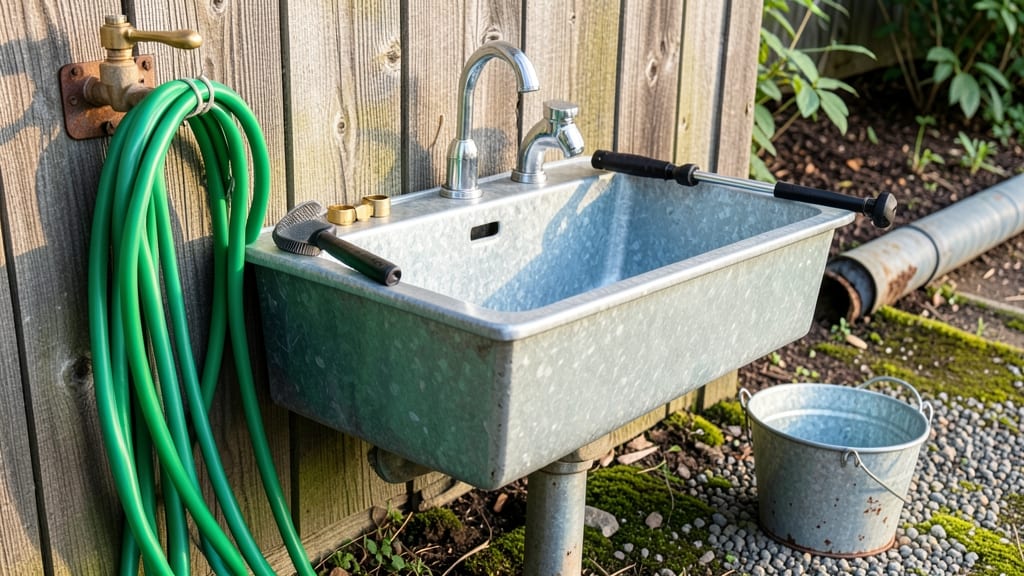
An outdoor garden hose sink connects directly to your hose bib, creating a dedicated water station for gardening tasks, tool cleaning, or plant rinsing. Mount it by securing a threaded sink basin to a hose adapter with plumber’s tape, reinforcing with brackets, and installing a backflow preventer to protect your drinking water.
This setup transforms your outdoor space by giving you a permanent, accessible water source right where you need it. 💧 The threaded connection ensures a tight seal, while the backflow preventer is non-negotiable—it stops contaminated water from flowing back into your home plumbing.
Many homeowners choose these sinks to eliminate the hassle of lugging buckets or hoses, especially in large gardens or workshop areas.
For best results, position the sink near an electrical outlet if you plan to use power tools nearby, and always use a freeze-proof hose bib in colder climates to prevent pipe bursts.
When selecting components, pay attention to the hose bib's PSI rating—most outdoor sinks work best with 60-80 PSI pressure. A freeze-proof bib is ideal if you live in areas with winter freezes, as it prevents water from getting trapped in the valve.
For extra stability, use heavy-duty brackets that can handle the weight of wet tools or plants. Always test the connection after installation by running water for 5-10 minutes to check for leaks before relying on it for serious tasks.
💡 In This Article
- Choosing the Right Hose Bib and Backflow Preventer
- Step-by-Step Outdoor Hose Sink Installation Guide
Choosing the right hose bib and backflow preventer
The hose bib—also called a hose spigot—is the heart of your outdoor sink setup, and selecting the wrong type can lead to leaks, freezing damage, or even plumbing violations.
Standard hose bibs have a single valve that can trap water inside during cold snaps, causing the pipe to burst when it freezes.
This is why freeze-proof hose bibs are the gold standard for outdoor installations—they feature a vacuum breaker that allows water to drain completely when the valve is closed, preventing ice buildup. 🥶 For regions with winter temperatures below 20°F, a freeze-proof bib with an insulated sleeve (like those rated for -40°F) adds an extra layer of protection.
Backflow preventers are legally required in many municipalities because they stop contaminated water from flowing backward into your home's drinking water supply. The most common type is the vacuum breaker, which uses air pressure to create a barrier—when water flow stops, air enters the line, preventing any reverse flow.
For areas with high water pressure (typically above 80 PSI), a reducing valve paired with a backflow preventer ensures the sink operates safely without stressing the connections. Always check local plumbing codes, as some regions mandate specific backflow device types or require professional installation for outdoor water systems.
Here’s what to look for when shopping: A 1/2-inch NPT (National Pipe Thread) connection is standard for most hose bibs, but verify compatibility with your existing plumbing. The sink basin should have a matching female thread to screw onto the hose bib’s male thread.
Pro tip: If your hose bib has a 3/4-inch connection, you’ll need an adapter to fit a standard sink basin. Also, opt for a stainless steel or brass bib—these materials resist corrosion far better than zinc or cast iron, which can degrade in outdoor conditions over time.
Pressure ratings are another critical factor. Most outdoor hose bibs handle 60-120 PSI, but if your home’s water pressure exceeds 100 PSI, install a pressure-reducing valve upstream to protect the connections.
You’ll know if your pressure is too high when water sprays erratically or the sink basin vibrates during use. 💦 For testing, attach a pressure gauge to your hose bib before installation—if it reads above 80 PSI, address the issue before mounting the sink to avoid damaging the threads or causing leaks.
Don’t overlook the hose bib’s orientation either. Some models require a downward-facing outlet to prevent water from pooling around the base, which can lead to rust or mold. If your sink will be mounted on a wall, choose a bib with a side-mount or through-wall design for easier access.
For freestanding setups (like those on a workbench), a post-mount bib with a 90-degree elbow keeps the hose connection neat and out of the way.
Finally, consider the finish: A black or galvanized steel bib is budget-friendly but may require repainting every few years, while chrome or stainless steel finishes resist rust and require minimal maintenance. If you’re in a coastal area, stainless steel is the best choice—salt air accelerates corrosion in cheaper metals.
Pair your bib with a hose adapter with a backflow preventer built in to streamline installation and ensure compliance in one step.