
Companion Plants
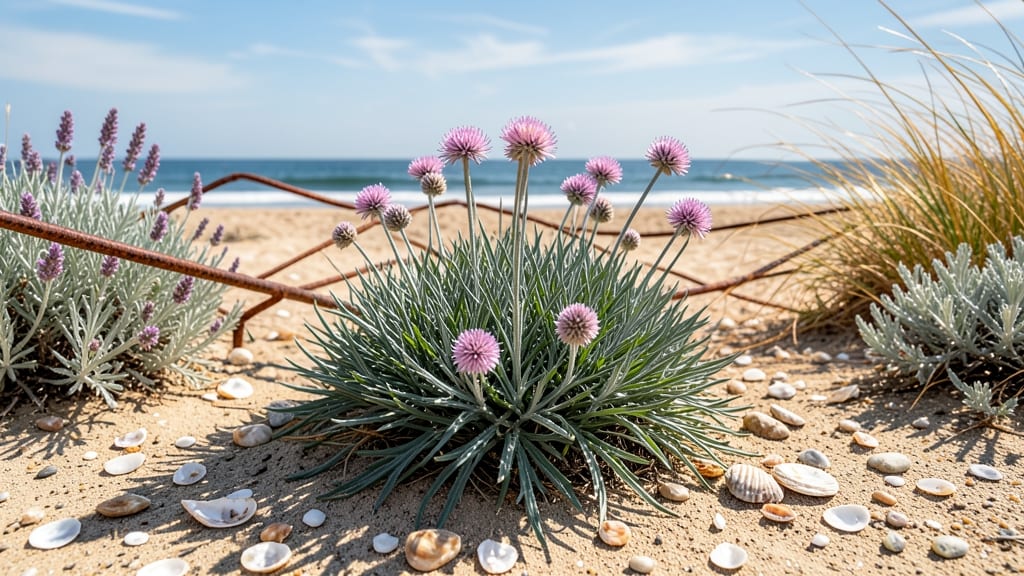
For seaside gardens, salt-tolerant plants like sea oats, beach grass, and saltmarsh cordgrass thrive in windy, salty conditions while enhancing coastal beauty. Drought-resistant succulents and hardy shrubs like rosemary also perform exceptionally well.
Salt-tolerant plants are specially adapted to handle the harsh coastal environment, where salt spray, sandy soil, and strong winds can stress other varieties. 🌊 These hardy species often develop deep root systems to access moisture and specialized leaf structures to minimize salt absorption.
For instance, sea oats not only stabilize dunes but also provide erosion control, making them a practical choice for coastal landscaping. When selecting plants, consider your garden's specific conditions—whether it's exposed to direct ocean spray or just occasional salt exposure from sea breezes.
Many coastal regions experience seasonal variations in salt exposure, so understanding your local climate helps determine which plants will thrive year-round. For example, rosemary can handle mild salt exposure but may struggle in areas with heavy, consistent salt spray.
Pairing these plants with native species often yields the best results, as they've evolved alongside the local conditions for centuries.
💡 In This Article
- How Salt-Tolerant Plants Survive Coastal Conditions
- Best Salt-Resistant Plants by Garden Type and Climate
How salt-tolerant plants survive coastal conditions
Salt-tolerant plants have evolved remarkable adaptations to thrive where most plants would wither. Their survival hinges on specialized mechanisms like salt exclusion, where roots filter out excess sodium chloride before it enters the plant's vascular system.
For example, saltmarsh cordgrass (Spartina alterniflora) uses a process called salt gland excretion—tiny pores on leaf edges actively pump salt back out, maintaining internal balance. This is why you'll often see salt crystals forming on the edges of leaves after a storm. 💧
Their deep, fibrous root systems (often extending 3-5 feet deep) anchor them against wind and access moisture from sandy soil, which can hold only 10-20% of its volume in water compared to clay soil's 40-60%.
Sea oats (Uniola paniculata) develop extensive underground networks that stabilize dunes while preventing erosion. These roots also produce mucilage, a gel-like substance that binds soil particles and improves water retention—critical in nutrient-poor coastal sands.
Wind resistance is another key adaptation. Plants like beach heather (Erica cinerea) grow low to the ground, reducing wind exposure, while others develop flexible stems that bend rather than snap. Their waxy leaf coatings reflect sunlight and reduce water loss, a trait shared with drought-resistant succulents.
Even their growth patterns adapt: many coastal plants grow slowly but densely, forming thick mats that protect against salt spray and sand abrasion.
Not all salt tolerance is equal. Plants are categorized by their salt tolerance levels: obligate halophytes (like saltmarsh grass) require salt to grow, facultative halophytes (like rosemary) tolerate it but don't need it, and glycophytes (most garden plants) avoid salt entirely.
This explains why rosemary thrives in moderate salt exposure (up to 0.5% soil salinity) but may struggle near direct ocean spray, where salinity can exceed 3-5%.
Climate plays a surprising role too. In colder coastal regions, plants like sea thrift (Armeria maritima) enter dormancy during winter, conserving energy when salt stress peaks after storms.
Meanwhile, in tropical zones, salt-tolerant palms (Cocos nucifera) rely on their salt-excreting leaves to handle constant saltwater mist. Understanding these regional differences helps match plants to specific microclimates.
What most gardeners overlook is how these plants outcompete weeds. Their aggressive root systems and dense growth suppress invasive species, reducing maintenance. For instance, beach grass can outgrow dandelions by 10x in sandy soil, making it a low-maintenance groundcover. 🌱