
Tools
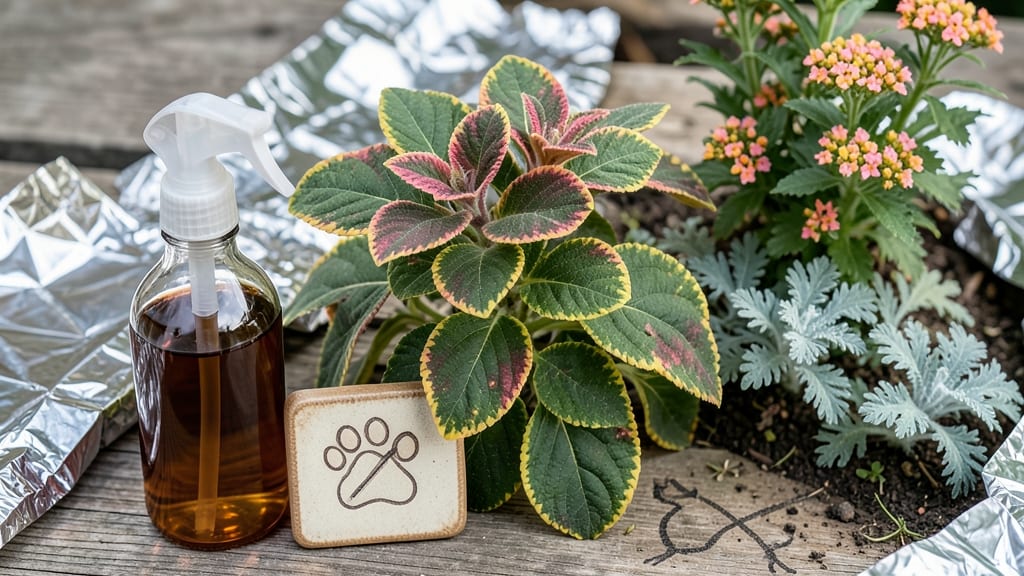
To repel cats from your garden, use natural deterrents like citrus peels, coffee grounds, or fragrant herbs such as rosemary and lavender. Physical barriers like prickly plants or motion-activated sprinklers work well without harming pets or wildlife.
Cats have sensitive noses and instincts that make them avoid strong smells and uncomfortable textures. 🌿 Scattered citrus peels or coffee grounds disrupt their scent-marking behavior, while herbs like lavender create an unpleasant environment.
Physical barriers like prickly plants or ultrasonic devices trigger their natural avoidance of unfamiliar or threatening spaces. The key is consistency—cats learn through repetition, so reapply deterrents every few days or use long-lasting solutions like commercial sprays infused with essential oils.
For best results, combine multiple methods. For example, plant catnip in one corner (it attracts them away from other areas) while surrounding vulnerable plants with sharp-edged foliage like coleus canina.
Motion-activated sprinklers add an extra layer of protection during active hours. Always test natural solutions in small areas first, as some plants may harm other wildlife or your garden's health.
💡 In This Article
- Why Cats Avoid These Natural Garden Repellents
- Best Cat-Repelling Plants for Your Garden Layout
Why cats avoid these natural garden repellents
Cats possess an extraordinary sense of smell—up to 14 times more sensitive than humans—which makes strong scents their first line of defense against garden intruders. 🌿 When you scatter citrus peels or coffee grounds, the volatile organic compounds (like limonene in citrus or caffeine in coffee) trigger their natural avoidance instincts.
These compounds disrupt the feline pheromone communication system, making your garden smell foreign and unwelcoming. Cats also dislike the texture of these materials under their paws, which feels abrasive compared to soft soil.
The science behind this lies in their evolutionary survival instincts. In the wild, cats avoid areas with unfamiliar or potentially harmful scents—think rotting meat or toxic plants. 🐾 Vinegar, another effective repellent, contains acetic acid that irritates their sensitive nasal passages.
Even diluted (1:4 vinegar to water), it creates an environment cats will bypass. The key is reapplication: these scents dissipate within 2-3 days, so fresh deterrents are essential for consistent protection.
Ultrasonic devices work similarly by emitting high-frequency sounds (above 20 kHz) that humans can't hear but create discomfort for cats.
Physical barriers exploit another feline instinct—their dislike of unfamiliar textures. Prickly plants like coleus canina or rue create tactile discomfort, while motion-activated sprinklers trigger their natural fear response to sudden movement. 💦 The surprise water spray mimics predator attacks, making cats associate your garden with danger.
What most people overlook is that cats learn through repetition, so these deterrents must be consistently present. A single application won't create lasting change—think of it like training a dog with treats, but in reverse.
Not all repellents work equally well, and understanding why helps optimize effectiveness. For example, catnip—while attractive to some cats—can actually attract others, making it a poor choice for general deterrence unless used strategically in controlled areas. 🌱 The most reliable methods combine scent, texture, and movement disruption.
A well-placed combination of citrus-scented mulch around vulnerable plants, combined with a motion-activated sprinkler near high-traffic areas, creates a multi-sensory deterrent system that's far more effective than any single approach.
Temperature also plays a subtle but important role.
Cats are more active during cooler hours, so applying deterrents in the morning or evening maximizes their impact when cats are most likely to patrol your garden. 🌅 The combination of fresh scents and their natural circadian rhythms makes these times particularly effective for repelling activity.
Always test new deterrents in small, contained areas first—some cats may develop tolerance to certain scents over time, requiring you to rotate your repellent methods for long-term success.