
Size
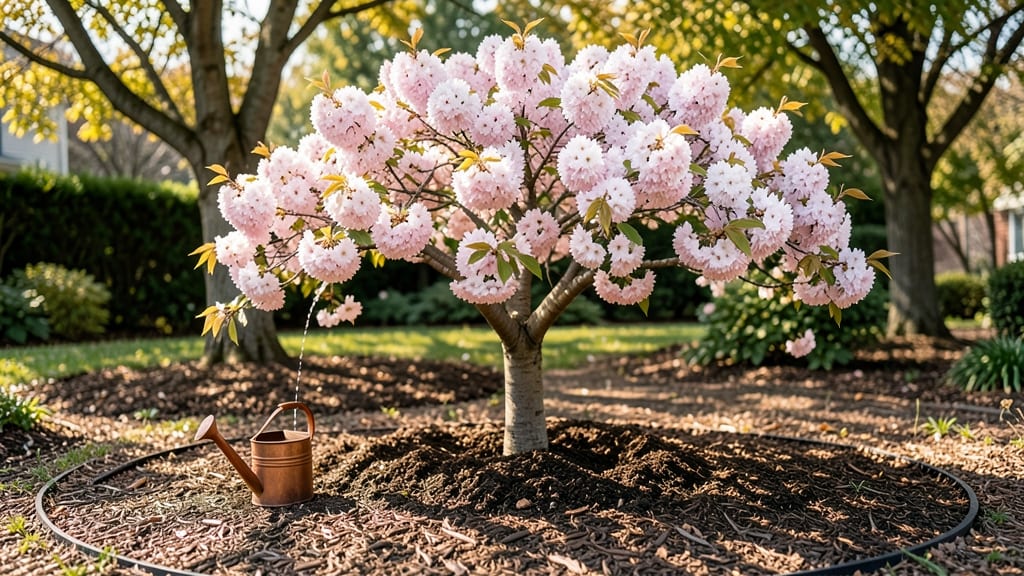
To grow a sakura tree in your garden, select the right variety—dwarf types like Sakura ‘Little Princess’ grow 15–20 feet tall, while standard cherry blossoms (Prunus serrulata) reach 30–40 feet. Plant in well-drained soil with full sun exposure and space trees properly to prevent overcrowding or future pruning needs.
Choosing the right sakura tree variety is your first step to success. 🌸 Dwarf varieties like ‘Little Princess’ are perfect for smaller gardens, while standard types need more space for their sprawling canopies.
The key to thriving sakura trees lies in their growing conditions—well-drained soil prevents root rot, and full sun exposure ensures vibrant blooms each spring. I recommend planting in early spring or fall when temperatures are mild, giving roots time to establish before extreme weather arrives.
Once planted, maintain consistent moisture without waterlogging the soil, especially during the first year. Mulching helps retain moisture and regulates soil temperature, while proper spacing (5–10 feet between trees) prevents competition for nutrients. Remember, sakura trees are long-term investments—their beauty comes with patience, but the reward is worth every effort.
💡 In This Article
- Sakura Tree Varieties: Size and Growth Habits Explained
- Step-by-Step Sakura Tree Planting Guide for Gardens
Sakura tree varieties: size and growth habits explained
Sakura trees—specifically Prunus serrulata and its cultivars—vary dramatically in size, with mature heights ranging from compact 10–15 feet in dwarf varieties to towering 40–50 feet in standard types.
The ‘Little Princess’ cultivar, for example, stays under 15 feet with a spread of 8–10 feet, making it ideal for small gardens or urban landscapes.
In contrast, the iconic ‘Somei-Yoshino’ can reach 30–40 feet with a sprawling canopy of 20–30 feet, requiring ample space for its roots to spread unobstructed.
The growth rate of sakura trees depends on both variety and climate. In USDA zones 5–9, most sakura trees grow 12–24 inches per year when young, slowing to 6–12 inches annually as they mature.
For instance, a ‘Kanzan’ (a popular standard variety) may take 5–7 years to reach 15 feet but continues growing for decades.
Cooler climates (USDA zone 5) can stunt growth slightly, while warmer zones (USDA zone 9) may accelerate early development but require consistent moisture to prevent stress.
Root systems play a critical role in size management. Sakura trees develop deep taproots that can extend 3–5 feet below the surface, while lateral roots spread 2–3 times the canopy width.
This means planting too close to structures or other plants risks root competition, leading to stunted growth or poor flowering.
The soil depth must be at least 18–24 inches deep to accommodate these roots, and well-drained soil prevents waterlogging, which can cause root rot and weaken the tree’s ability to support its full height.
Flowering habits also tie to size—larger trees often produce more abundant blooms, but dwarf varieties like ‘Shirotae’ compensate with prolific, early spring flowers despite their smaller stature. The key is balancing size expectations with your garden’s layout.
For example, a 15-foot sakura fits neatly under a 20-foot ceiling in a courtyard, while a 40-foot specimen needs a full yard to thrive without pruning. Pruning mature sakura trees is challenging due to their brittle wood, so spacing is far easier than corrective trimming later.
Climate also influences flowering time and intensity. In USDA zone 7, sakura trees typically bloom in late March to early April, while in zone 9, they may flower as early as February or as late as April, depending on winter chill hours.
Dwarf varieties often bloom slightly earlier than standard types, giving you a staggered display if you plant multiple varieties. The trade-off? Smaller trees may produce fewer flowers per branch, but their concentrated blooms create a stunning visual impact in proportion to their size.
Consider these factors when selecting a variety: your garden’s available space, local climate, and long-term maintenance goals. A dwarf sakura like ‘Akebono’ (12–15 feet) thrives in containers or tight spaces, while a standard ‘Takasago’ (30–40 feet) demands open ground.
Both require similar care, but their size dictates where—and how—you can enjoy their breathtaking spring blooms.