
Tools
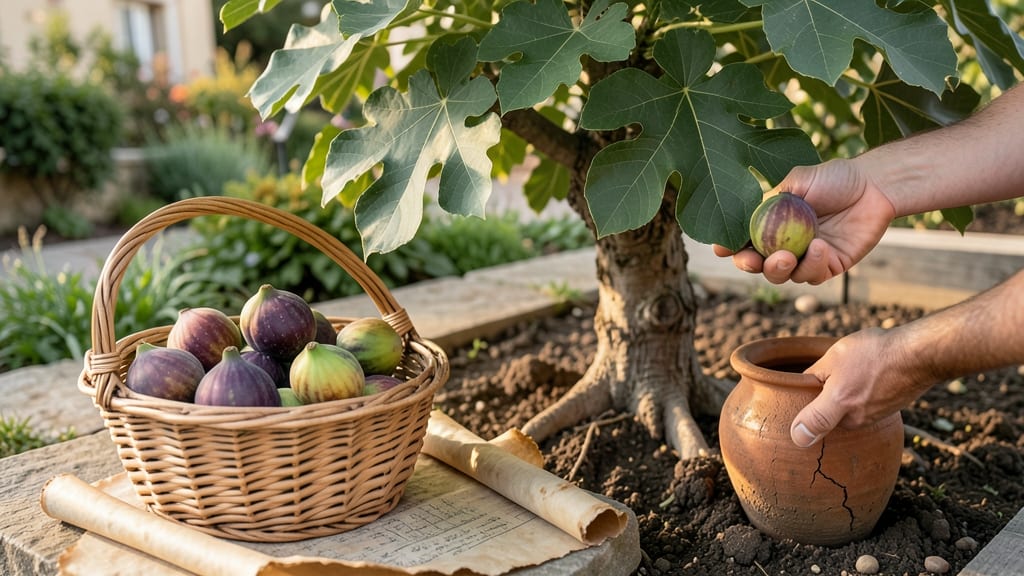
The Garden in the Bible primarily represents Eden, where humanity’s story began with Adam and Eve surrounded by abundant life, including the iconic Tree of Life and Tree of Knowledge. This sacred space symbolizes divine provision and the profound choices that shaped human destiny, while its imagery resurfaces in Revelation as the restored paradise of the New Jerusalem.
The biblical garden we know as Eden—often called paradise in later scriptures—serves as more than just a setting; it’s the foundation of humanity’s relationship with God and creation. 🌿 This lush sanctuary, described in Genesis 2-3, wasn’t just a physical place but a symbol of divine order, where God’s presence was tangible and life thrived without struggle.
What’s fascinating is how this concept echoes in Revelation, painting Eden as both a beginning and an eternal promise. The garden’s dual role—representing both the fall of humanity and the hope of restoration—makes it one of the most powerful symbols in Scripture.
Beyond its spiritual significance, Eden’s description in the Bible offers clues about ancient agricultural knowledge and the Hebrew understanding of a perfectly balanced ecosystem.
The presence of specific trees and flowing rivers suggests a world designed for harmony, where humans were meant to cultivate and care for the land in partnership with God. This vision of stewardship remains relevant today as we consider our own role in preserving creation.
💡 In This Article
- Biblical Names and Descriptions of Eden’s Garden
- Symbolism and Themes in Biblical Gardens
Biblical names and descriptions of Eden’s garden
The Hebrew term for Eden—עֵדֶן (pronounced "ay-dan")—appears only three times in Scripture (Genesis 2:8, 10, 15), yet carries immense weight. Linguists suggest it may derive from an Akkadian word meaning "plain" or "steppe," reflecting a fertile, open landscape rather than a dense forest.
The Greek translation (Septuagint) renders it as paradise (παράδεισος), a Persian loanword meaning "walled garden" or "park," which later became the English "paradise." This dual naming reveals how Eden functioned both as a literal garden and a sacred space—like a temple where humanity could encounter God.
Genesis 2:8-14 paints Eden as a 400-mile-long paradise east of the Garden of Eden (a geographical detail that fascinated medieval scholars). The text describes four rivers—Pishon, Gihon, Hiddekel (Tigris), and Euphrates—which likely represent the headwaters of major Mesopotamian waterways.
The Tree of Life, whose fruit granted immortality, and the Tree of Knowledge of Good and Evil, whose forbidden fruit introduced sin, weren’t just plants but theological symbols.
Botanists note the biblical description aligns with tropical fruit trees (like figs and pomegranates) common to the region, suggesting Eden’s climate was warm and humid—ideal for abundant growth.
Ezekiel’s later vision (Ezekiel 47:1-12) expands this imagery, describing a restored garden near the temple with water flowing from the sanctuary, healing the Dead Sea’s bitterness. This mirrors Eden’s original design: a place where God’s presence brings life.
The parallel isn’t accidental—both passages emphasize water as a source of restoration, linking Eden’s fertility to God’s covenant with His people. Even the garden’s eastward location (Genesis 2:8) may symbolize humanity’s movement toward God’s light, a theme reinforced in Revelation’s New Jerusalem.
What’s often overlooked is how Eden’s layout reflects ancient Near Eastern temple gardens, where sacred spaces were designed to mirror the cosmos. The four rivers could represent the four cardinal directions, while the garden’s central trees symbolized the axis mundi (world center).
This architectural parallel suggests Eden wasn’t just a garden but a theological model for how creation should function under God’s design—a concept echoed in later biblical descriptions of the temple courtyard (Ezekiel 40-48).
The garden’s botanical diversity also hints at God’s intention for humanity to cultivate and name creation (Genesis 2:19-20). The Hebrew word for "work" (עָבַד, avad) used in Genesis 2:15 carries the same root as the word for "worship," implying that stewardship was both a duty and a sacred act.
This dual meaning explains why later prophets like Isaiah (58:11) and Jeremiah (31:12) use garden imagery to describe God’s renewed relationship with His people—a promise of restoration that begins in Eden and culminates in Revelation’s final paradise.
Consider this: Eden’s description in Genesis includes every kind of tree pleasing to the eye and good for food (Genesis 2:9), a phrase that may reflect ancient agricultural ideals where beauty and utility were inseparable.
This detail underscores the garden’s role as a prototype for a world where aesthetics and function align perfectly—a vision that contrasts sharply with the thorns and thistles introduced after the Fall (Genesis 3:18).
The contrast isn’t just about punishment; it’s about what was lost and what will be restored.