
Tools
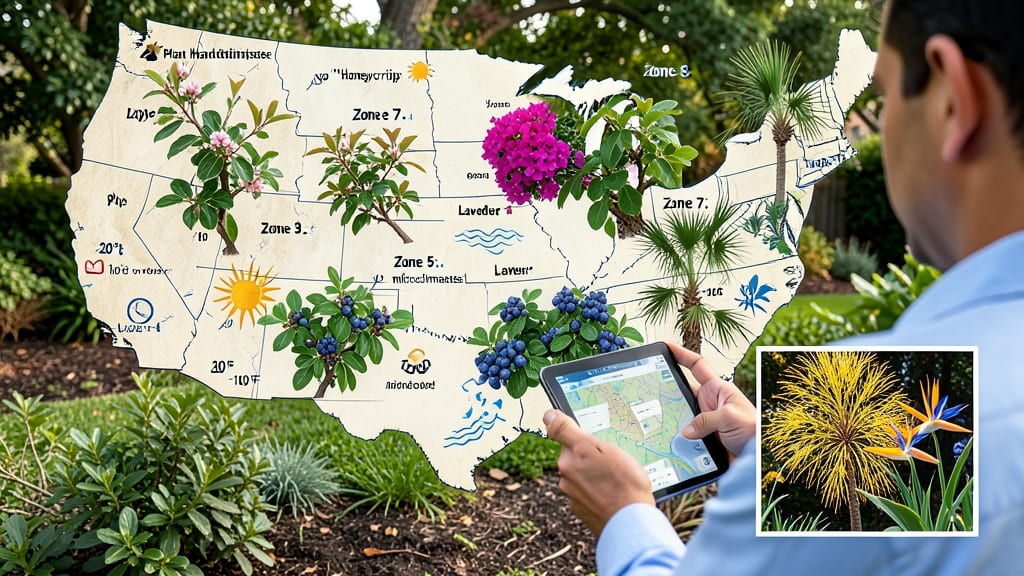
US gardening zones categorize regions by average annual minimum temperatures to determine which plants thrive in each area, ranging from Zone 1 (coldest) to Zone 13 (warmest). These zones help gardeners select frost-hardy species and plan planting schedules effectively.
Understanding US gardening zones means knowing your region's coldest average winter temperature—the key factor that decides which plants will survive. 🌱 The USDA (United States Department of Agriculture) updates these zones every 10 years using 30 years of climate data, which is why Zone 7b today might be different from what your parents used.
For example, Zone 5 gardeners can grow hardy perennials like coneflowers, while Zone 9 gardeners might opt for citrus trees that would freeze in colder climates. Microclimates—like sunny south-facing slopes—can also shift your effective zone by 1-2 levels, so always check both your general zone and local conditions.
These zones aren't just about survival—they guide planting timing too. A Zone 6 gardener might start cool-season crops in early spring, while a Zone 10 gardener can plant year-round. The 10-15°F difference between zones explains why a peach tree thrives in Georgia but would die in Minnesota.
Tools like the USDA Interactive Plant Hardiness Map make it easy to find your zone by entering your ZIP code, while plant tags often list their recommended zones to simplify shopping.
💡 In This Article
- How USDA Plant Hardiness Zones Work
- Choosing Plants Based on Your US Gardening Zone
How USDA plant hardiness zones work
The USDA Plant Hardiness Zone Map divides North America into 13 zones based on the average annual minimum winter temperature, measured over a 30-year period.
Each zone is further split into "a" and "b" subzones, representing a 5°F difference—so Zone 6a has average lows of -10°F to -5°F, while Zone 6b ranges from -5°F to 0°F.
This precision matters because plants like blueberries (Zone 3-7) or magnolias (Zone 4-9) have strict temperature limits for survival. The science behind it involves analyzing 30 years of climate data to account for natural temperature fluctuations, ensuring gardeners have reliable information.
What makes these zones so critical is how they correlate with plant hardiness.
For example, a Zone 5 (average lows of -20°F to -15°F) can support hardy perennials like daylilies or black-eyed Susans, while the same plants would struggle in Zone 10 (average lows of 30°F to 35°F) due to heat stress.
The USDA updates the map every decade to reflect climate change—since 1990, many regions have shifted one zone warmer, opening new possibilities for heat-loving crops like okra or sweet potatoes in areas that once only supported cool-season plants. 🌡️
Zone maps also account for microclimates, which can create pockets of warmth or cold within a single area. A south-facing wall might raise temperatures by 5-10°F compared to the surrounding yard, allowing you to grow plants one zone harder than your official zone suggests.
Conversely, low-lying areas or shaded spots can be 2-3°F colder, risking frost damage to tender plants. This is why gardeners in Zone 7 might successfully grow Zone 8 plants like bougainvillea in protected microclimates, while the same plants would perish in exposed locations.
The transition from old to new zone maps highlights how climate change impacts gardening. The 2012 update shifted 25% of counties into warmer zones, reflecting rising temperatures.
For instance, parts of New York moved from Zone 5 to Zone 6, while Texas saw areas jump from Zone 8 to Zone 9. This shift means gardeners must now reconsider traditional plant choices—what once thrived may now struggle, and new varieties become viable.
The USDA’s interactive map lets you explore these changes by ZIP code, showing how your local climate has evolved over time.
Beyond temperature, zones indirectly influence other growing factors like last frost dates. A Zone 4 gardener might face a 120-day growing season, while a Zone 10 gardener enjoys year-round planting.
This affects crop selection: cool-season vegetables like broccoli or cabbage are staples in northern zones, while southern zones favor heat-tolerant crops like sweet potatoes or okra.
The zone system also helps explain why some plants, like peaches, require chill hours (prolonged exposure to 32-45°F) to fruit—something Zone 9+ gardeners must work around with special varieties.
For practical application, always check a plant’s hardiness zone range on its tag or in gardening databases. If you’re on the border—say, Zone 7b—opt for plants labeled Zone 6-8 to ensure safety.
Tools like the USDA Interactive Map or apps like Gardenate provide real-time zone lookups, while local nurseries often offer zone-specific recommendations. Understanding your zone isn’t just about survival; it’s about maximizing your garden’s potential with the right plants in the right place. ✨