
Tools
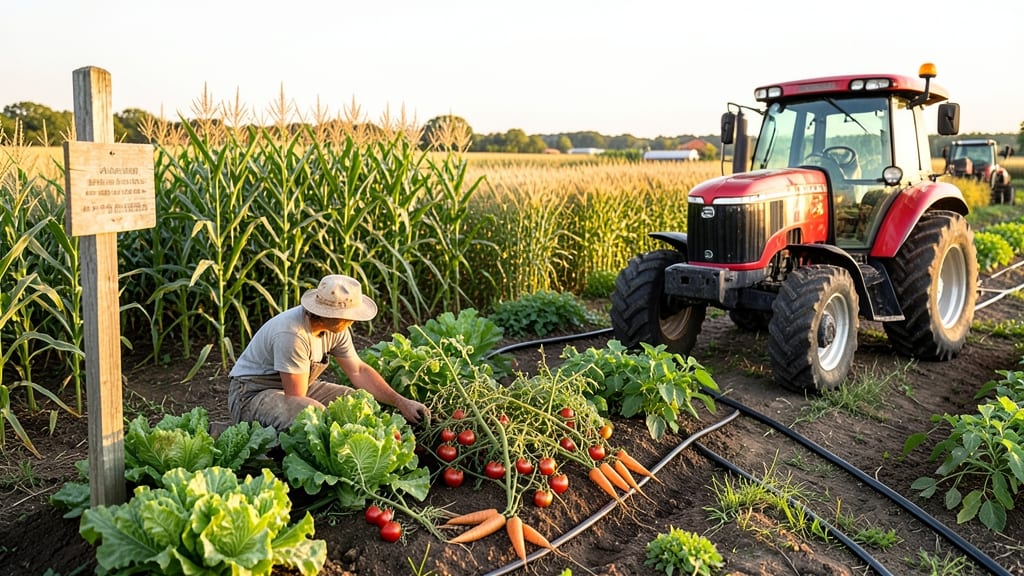
Gardening in agriculture involves the deliberate growing of crops—from vegetables and fruits to flowers and herbs—on a smaller scale than commercial farming, using eco-friendly methods like crop rotation and organic fertilizers to boost soil fertility and productivity. It combines home gardening with professional farming techniques.
This practice stands apart from industrial farming by focusing on sustainability and biodiversity rather than mass production. 🌱 Unlike large-scale operations, agricultural gardening prioritizes manual care, companion planting, and natural pest control—methods that reduce chemical use while maintaining healthy ecosystems.
Many modern farmers now blend these traditional techniques with cutting-edge tech like precision irrigation and soil sensors to maximize yields without compromising quality.
What sets it apart is the flexibility to adapt to diverse environments, from backyard plots to small commercial farms. The result? Higher-quality produce with deeper flavors and stronger community ties—because when you grow food mindfully, you're not just feeding bodies, you're nurturing the land for future generations.
💡 In This Article
- Key Differences Between Gardening and Large-Scale Farming
- Modern Agricultural Gardening Techniques for Higher Yields
Key differences between gardening and large-scale farming
At its core, gardening in agriculture operates on a fundamentally different scale than industrial farming. While large-scale operations focus on maximizing output through monoculture—planting single crops across thousands of acres—gardening prioritizes diversity and adaptability.
A typical backyard garden might cover just 100-500 square feet, while a commercial farm could span hundreds of acres. This smaller scale allows gardeners to implement companion planting, where crops like basil and tomatoes grow together to deter pests naturally, rather than relying on synthetic pesticides.
The soil management approach reveals another critical difference. Industrial farms often use heavy machinery that compacts soil, requiring chemical fertilizers to maintain productivity. In contrast, gardeners work the soil manually or with lightweight tools, preserving its structure and microbial life.
Studies show that organic gardening methods can increase soil organic matter by 2-5% annually compared to conventional farming's 0.5-1%, thanks to composting and cover crops that prevent erosion and retain moisture. The texture becomes noticeably richer—almost like crumbly chocolate cake—when properly tended.
Pest control methods highlight the philosophical divide. Large-scale farms deploy broad-spectrum herbicides and insecticides that can harm beneficial insects, creating ecological imbalances. Gardeners use targeted solutions: neem oil for aphids, row covers for cabbage moths, or introducing ladybugs to devour mites.
This precision reduces chemical runoff by up to 90% while maintaining yields. The sensory difference is striking—gardens often hum with the sounds of bees and butterflies, while industrial fields may feel eerily quiet after pesticide applications.
Resource efficiency becomes a defining factor. Large-scale farms require massive inputs: 1,000 gallons of water per acre per day for irrigation alone, plus diesel for equipment. A well-managed garden might use 20-30% less water through techniques like drip irrigation and mulching.
The energy savings are equally dramatic—manual gardening eliminates the 500+ horsepower tractors that dominate industrial farms. This hands-on approach creates a deeper connection to the land, where every seed planted feels like an investment in both harvest and heritage.
Yield goals also differ dramatically. While industrial farms chase tonnage per acre, gardeners often prioritize quality over quantity.
A single heirloom tomato plant might produce 20-30 fruits over a season, each weighing 8-12 ounces with complex flavors, compared to 50-100 pounds of uniform but bland tomatoes from a commercial field. The trade-off?
Garden yields are typically 20-40% lower per acre, but the nutritional density and environmental benefits make up for it.
Consider the economic impact: small-scale gardening creates 3-5 times more jobs per acre than industrial farming, supporting local economies through farmers' markets and CSAs (Community Supported Agriculture).
The sensory reward comes when you bite into a sun-ripened peach—its aroma alone contains 400+ volatile compounds, far exceeding the flavor profile of commercially grown fruit that's often picked green for transport.