
Tools
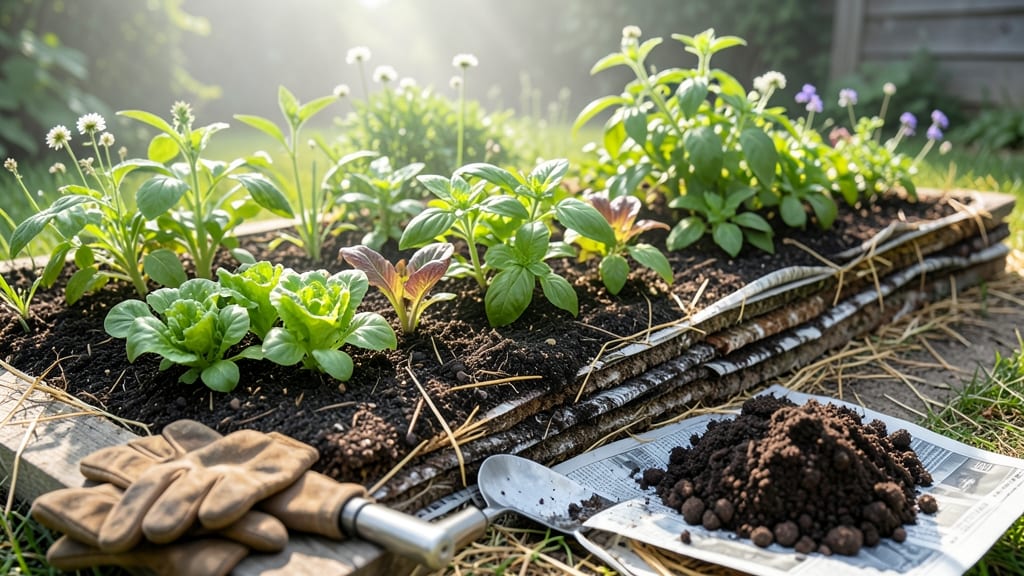
Lasagna gardening is a layered soil-building technique that creates rich planting beds by stacking organic materials like grass clippings, leaves, and cardboard, allowing them to decompose naturally over time for continuous plant growth.
This no-till gardening method mimics natural composting by alternating carbon-rich "brown" layers (like shredded leaves or straw) with nitrogen-rich "green" layers (such as grass clippings or vegetable scraps). 🌱 The process breaks down gradually, improving soil fertility and structure without the need for heavy tilling.
Many gardeners prefer it because it's low-maintenance and works well in both raised beds and in-ground plots, making it ideal for year-round planting.
Unlike traditional tilling, lasagna gardening preserves soil organisms and prevents erosion while creating a nutrient-dense environment. The layers act like a sponge, retaining moisture and gradually releasing nutrients as they decompose.
This approach is especially beneficial for beginners or those with poor-quality soil, as it transforms barren areas into productive garden spaces with minimal effort.
💡 In This Article
- How Lasagna Gardening Builds Fertile Soil
- Step-by-Step Guide to Starting a Lasagna Garden
How lasagna gardening builds fertile soil
Lasagna gardening works by replicating nature's composting process in layers, creating a nutrient-rich environment without traditional tilling. The method relies on alternating carbon-rich "brown" layers (like dried leaves or straw) with nitrogen-rich "green" layers (such as grass clippings or vegetable scraps).
This balance is crucial because carbon provides energy for microbes, while nitrogen fuels their growth, creating a perfect decomposition ecosystem. The microbial activity generates heat, accelerating the breakdown of materials into humus—a dark, crumbly soil amendment packed with plant nutrients.
The decomposition process typically takes 3-6 months to stabilize, depending on climate and material moisture. In warmer regions, layers may break down faster, while colder climates slow the process.
The key is maintaining a roughly 3:1 ratio of brown to green materials, which prevents odor and ensures efficient nutrient release. For example, a 6-inch layer of shredded newspaper (carbon) paired with 2-inch layer of grass clippings (nitrogen) creates an ideal balance.
The resulting soil structure becomes fluffy yet stable, with excellent water retention—similar to a well-aged compost but with better aeration for plant roots.
This layered approach also mimics natural forest floors, where fallen leaves and organic debris decompose slowly over decades. The gradual breakdown prevents nutrient spikes that can burn plants, instead providing a steady release as materials decompose.
Unlike traditional compost piles that require turning, lasagna gardens benefit from the insulation provided by the layers, protecting soil organisms from extreme temperatures. The method also suppresses weeds by blocking light to existing weed seeds while creating a hospitable environment for beneficial microbes and earthworms.
One of the most impressive aspects is how this technique transforms poor-quality soil. In my own garden, I've seen barren, compacted ground become fertile within 6 months using lasagna layers. The process improves soil structure by increasing porosity, allowing better root penetration and water infiltration.
Unlike tilling, which disrupts soil ecosystems, lasagna gardening preserves existing soil life while gradually enhancing its quality. The method works particularly well in urban areas where traditional gardening soil may be contaminated or lacking in organic matter.
Consider these key factors for successful soil building:
- Material selection: Avoid treated wood or diseased plants that could introduce pathogens
- Layer thickness: Aim for 4-12 inches total depending on planting depth needs
- Moisture management: Keep layers damp (like a wrung-out sponge) to support microbial activity
- Seasonal timing: Start in early spring or late summer for optimal decomposition before planting
The resulting soil becomes a living ecosystem that continues to improve over years. Unlike chemical fertilizers that provide temporary boosts, lasagna gardens create long-term soil fertility through biological processes. This makes it particularly valuable for organic gardeners and those seeking sustainable, low-maintenance gardening solutions. 🌿