
Size
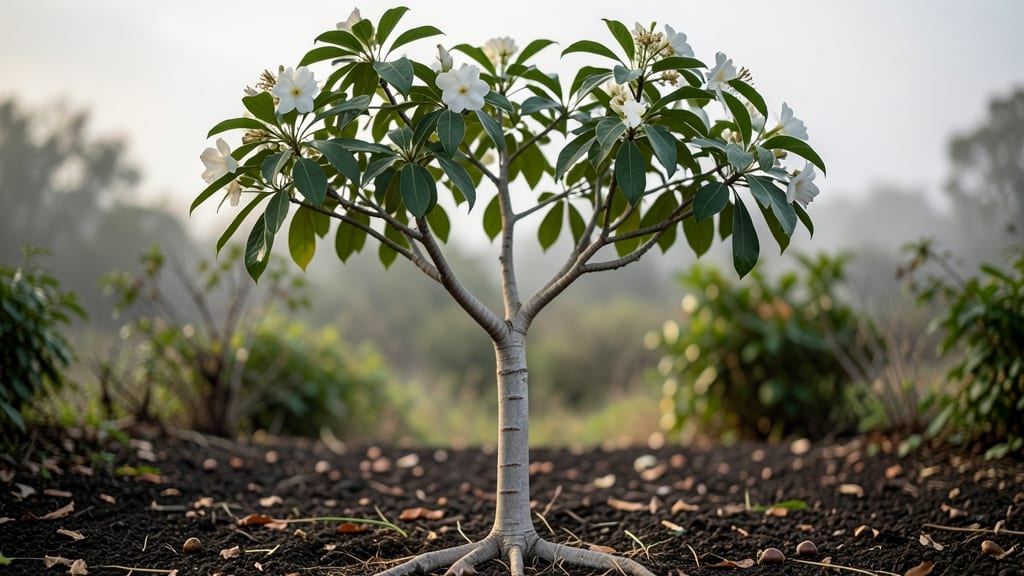
The rarest thing you can grow in a garden is the Middlemist Red camellia, a prized hybrid with deep crimson blooms that can sell for $5,000+ due to its near-impossible propagation from cuttings. Other ultra-elusive plants include the Handkerchief Tree (Davidia involucrata), known for its ghostly white bracts, and the Ghost Plant (Graptopetalum paraguayense), celebrated for its translucent, silver-blue foliage.
Growing these botanical marvels isn't just about luck—it's about overcoming nature's toughest hurdles. 🌿 The Middlemist Red, for example, requires precise grafting techniques and years of patience before flowering, while the Handkerchief Tree demands a humid, sheltered environment that mimics its native Chinese forests.
Even the Ghost Plant, though hardier, thrives only in bright, indirect light with minimal water—making it a challenge for impatient gardeners. These plants aren't just rare; they're living puzzles that reward only the most dedicated cultivators.
What makes them so elusive? Many of these species have evolved under very specific conditions—some, like the nearly extinct Franklinia alatamaha, can't survive outside their native habitats without intensive care. Others, like the Monkey Puzzle Tree, grow so slowly that waiting for maturity feels like watching paint dry.
The key to success? Researching each plant's exact needs and often investing in professional propagation methods when seeds or cuttings fail to take.
💡 In This Article
- Why Some Garden Plants Are Nearly Impossible to Grow
- How to Grow Ultra-Rare Plants: Expert Tips for Success
Why some garden plants are nearly impossible to grow
The rarest garden plants defy cultivation because of their genetic quirks and evolutionary adaptations. Take the Middlemist Red camellia—its hybrid vigor comes from a rare cross between Camellia japonica and Camellia reticulata, a combination that doesn’t occur naturally.
This makes propagation through cuttings nearly impossible, as the plant refuses to root easily, forcing growers to rely on grafting techniques that require years of expertise. 🌸 The Handkerchief Tree (Davidia involucrata) adds another layer of complexity: its seeds lose viability within days of ripening, and even when grown from cuttings, the tree takes 10-15 years before producing its iconic "handkerchief" bracts.
Environmental factors further complicate growth. The Franklinia alatamaha, a critically endangered wildflower, thrives only in the humid, acidic soils of Georgia’s coastal plains—a microclimate few gardens can replicate. Its seeds require stratification (a cold period) followed by precise moisture levels to germinate, and even then, survival rates are dismal.
Meanwhile, the Ghost Plant (Graptopetalum paraguayense) demands bright, indirect light and minimal water, mimicking its native Mexican rock crevices. Overwatering causes its translucent leaves to rot, while too little light dulls its signature silver-blue hue. These plants aren’t just picky; they’re ecologically specific.
Pollination adds another hurdle. Many rare plants, like the Corpse Flower (Amorphophallus titanum), rely on carrion flies to spread pollen—a process that’s nearly impossible to replicate in a home garden.
Even when flowers appear, their scent (a mix of rotting meat and gym socks) attracts only the right pollinators, and the plant’s single bloom lasts just 24-48 hours before wilting. For gardeners, this means missed opportunities unless you’re lucky enough to have a swarm of flies on standby. 🐝
Conservation status plays a role too. Plants like the Monkey Puzzle Tree (Araucaria araucana) are slow-growing (adding just 1-2 feet per year) and face habitat destruction in the wild.
Their seeds are often parasitized by insects before germination, and even when grown, they require acidic, well-draining soil—a rare combination in most gardens. The result? Fewer than 100 mature specimens exist outside Chile and New Zealand, making them a living relic rather than a practical garden plant.
Climate change exacerbates these challenges. The Handkerchief Tree, for example, struggles in hot, dry summers—its native Chinese forests provide high humidity and partial shade, conditions that few suburban gardens can mimic.
Without a microclimate (like a greenhouse or shaded patio), the tree’s leaves brown and drop, and its growth stalls. Even the hardy Ghost Plant can suffer in urban heat islands, where temperatures spike above its ideal 60-75°F range.
These plants aren’t just rare; they’re delicate survivors adapted to niches most gardens can’t replicate. 🌿
For the determined gardener, success often hinges on patience and precision. The Middlemist Red, for instance, may take 5-7 years to flower after grafting, while the Corpse Flower’s bloom cycle is so unpredictable that some gardeners never see one in their lifetime.
The key? Researching each plant’s exact requirements—from soil pH to sunlight angles—and accepting that some "garden plants" are better left to specialists. 💫