
Tools
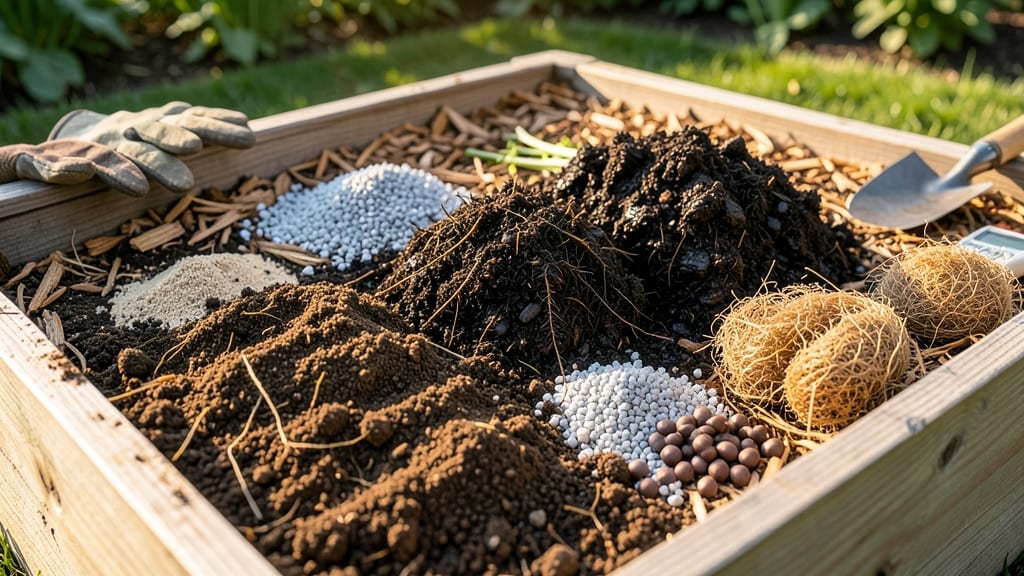
For garden soil, use a mix of compost, aged manure, coconut coir, and perlite for optimal drainage and nutrient balance. Test soil pH first to determine if amendments like peat moss or lime are needed for plant-specific needs.
Creating rich garden soil starts with understanding how organic materials transform your earth into a thriving ecosystem. 🌱 The right blend of compost and aged manure feeds beneficial microbes, while coconut coir and perlite create air pockets that roots love.
I've found that testing pH before amending saves time—many plants, like tomatoes, need slightly acidic soil, while others thrive in neutral or alkaline conditions. Think of amendments as fine-tuning your soil's personality to match your plants' preferences.
This approach isn't just about throwing ingredients together—it's about building a foundation that supports long-term plant health. For example, leafy greens benefit from nitrogen-rich compost, while blueberries demand acidic peat moss.
The key is starting with your base soil and adjusting gradually, rather than overhauling everything at once. Most gardeners discover their perfect mix through experimentation, and that's half the fun!
💡 In This Article
- How to Build Fertile Garden Soil with Organic Matter
- Best Organic Soil Amendments by Plant Type
How to build fertile garden soil with organic matter
Soil fertility begins with microbial life—those tiny organisms that break down organic matter into nutrients plants can absorb. Compost acts like a superfood for these microbes, providing them with energy to multiply and create a thriving ecosystem.
When you mix in well-aged compost (with a 1:1 carbon-to-nitrogen ratio), you're essentially feeding these beneficial bacteria and fungi, which then produce enzymes that unlock nutrients from other organic materials. This process, called mineralization, releases nitrogen, phosphorus, and potassium—the big three nutrients plants crave. 🌱
The texture of your soil matters just as much as its nutrient content. Organic matter like coconut coir and perlite act as structural components, creating air pockets that improve drainage while holding moisture near roots.
Perlite, a volcanic glass, expands when heated to create lightweight, porous particles that prevent compaction—ideal for heavy clay soils. Meanwhile, coconut coir (processed coconut husks) holds 6-10 times its weight in water while maintaining good aeration, making it perfect for sandy soils that drain too quickly.
The goal is a balance where roots can breathe and access both water and oxygen simultaneously.
Don't overlook the role of aged manure in this mix. While fresh manure can burn plants by releasing too much ammonia, properly composted versions (like cow or horse manure) provide a steady release of nutrients over months.
I've seen well-composted manure improve soil structure by adding humus—a dark, spongy substance that holds nutrients and water like a sponge. For container gardens, mixing in 20-30% aged manure by volume can transform sterile potting mixes into nutrient-rich growing mediums within weeks.
Seasonal timing affects how amendments work. Spring is ideal for adding compost and manure to warm up soil microbes for the growing season, while fall amendments break down over winter, enriching soil for spring planting.
The key is patience—rushing the process by over-amending can lead to nutrient runoff or fungal imbalances. Most gardeners find that applying 1-2 inches of compost annually maintains fertility without overwhelming the ecosystem.
Advanced gardeners often test their soil's cation exchange capacity (CEC), which measures how well soil holds onto nutrients. Organic matter increases CEC by providing more surfaces for nutrient molecules to cling to.
For example, 1% organic matter can increase CEC by 10-20 meq/100g of soil, meaning your plants have a larger nutrient reservoir to draw from during dry spells. This is why vegetable gardens often show dramatic improvements after just one season of organic amendments.
Consider this analogy: Your garden soil is like a living organism that needs proper "food" to function. Just as you wouldn't feed a person junk food and expect optimal health, your plants thrive when given the right balance of organic materials.
The magic happens when you combine the right ingredients with proper timing—creating a self-sustaining cycle that reduces your need for chemical fertilizers over time. 🌿