
Planting
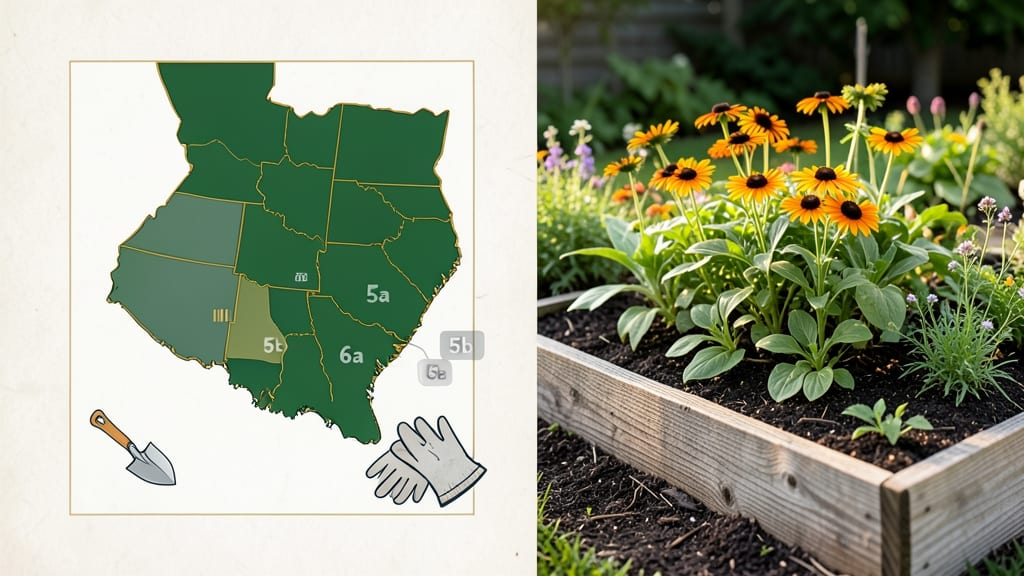
Illinois gardening zones primarily include USDA Zones 5 and 6, with northern regions reaching Zone 4 and southern areas extending into Zone 7. These classifications determine frost timing, plant hardiness, and optimal planting schedules across the state.
Understanding Illinois' gardening zones helps you choose plants that thrive in your local climate. The USDA zone system is based on average annual minimum temperatures, and Illinois' range means you'll experience late spring frosts in the north and earlier fall planting in the south.
For example, Zone 4 areas like Chicago face shorter growing seasons compared to Zone 7 regions near St. Louis. 🌱 This variation explains why some plants flourish in northern Illinois but struggle in the southern part of the state.
These zones also influence when to plant cool-season crops like broccoli or warm-season favorites such as tomatoes. Northern Illinois gardeners should wait until after the last frost date (typically mid-May), while southern areas can start earlier.
The zone map helps you select cold-hardy perennials like coneflowers or heat-tolerant annuals like zinnias for your specific location.
💡 In This Article
- How Illinois’ USDA Zones Affect Plant Survival
- Best Plants for Illinois’ USDA Zones 4-7
How Illinois’ USDA zones affect plant survival
The USDA zone system classifies regions based on average annual minimum winter temperatures, measured over a 30-year period. In Illinois, this means the difference between Zone 4 and Zone 7 can be as much as 10°F in winter lows.
For example, northern Illinois (Zone 4) experiences average minimum temperatures of -30°F to -20°F, while southern Illinois (Zone 7) rarely drops below 0°F. This temperature variation directly impacts which plants can survive winter dormancy and when they'll emerge in spring.
These temperature zones create distinct frost-free periods across the state. Northern Illinois typically sees its last frost around May 15-20, while southern areas can be frost-free by April 10-15.
This 4-6 week difference explains why gardeners in southern Illinois can plant warm-season crops like tomatoes 3-4 weeks earlier than their northern counterparts. The zone system also helps predict first fall frosts, which occur around October 15 in the north but can extend into November in southern regions.
Plant survival depends on matching species to these climatic conditions. Cold-hardy perennials like peony bushes (Zone 3-8) thrive across all Illinois zones, while tender annuals like geraniums (Zone 10-11) require summer containers in Zone 4 areas.
The zone classification helps gardeners select varieties that won't suffer from winter dieback or struggle with summer heat. For instance, black-eyed Susans (Zone 3-9) flourish in all Illinois zones, while oleander (Zone 8-11) would perish in northern gardens.
Seasonal planting windows vary dramatically by zone. In Zone 4 areas, gardeners must wait until after May 15 for warm-season crops, while Zone 7 gardeners can plant tomatoes as early as April 15.
This timing difference affects crop selection—northern gardeners might focus on early-maturing varieties of vegetables, while southern gardeners can grow longer-season varieties with more yield potential. The zone system essentially creates a localized growing calendar that aligns plant development with climate patterns.
Microclimates add another layer of complexity. Urban areas like Chicago (Zone 5) can experience 5-10°F warmer minimum temperatures than rural areas just 20 miles away due to the "urban heat island" effect.
This means gardeners in city pockets might successfully grow plants rated for Zone 6 even in Zone 5 areas. Conversely, low-lying areas with poor drainage may experience colder microclimates than surrounding regions, requiring gardeners to adjust their zone expectations accordingly.
Understanding these zone-based patterns helps gardeners make informed decisions about plant selection, mulching strategies, and seasonal care. For example, Zone 4 gardeners need heavier mulch layers (4-6 inches) to protect roots from extreme cold, while Zone 7 gardeners focus on summer shade protection for heat-sensitive plants.
The zone system essentially serves as a climate-based decision tool that maximizes gardening success by matching plants to their optimal growing conditions.