
Fertilization
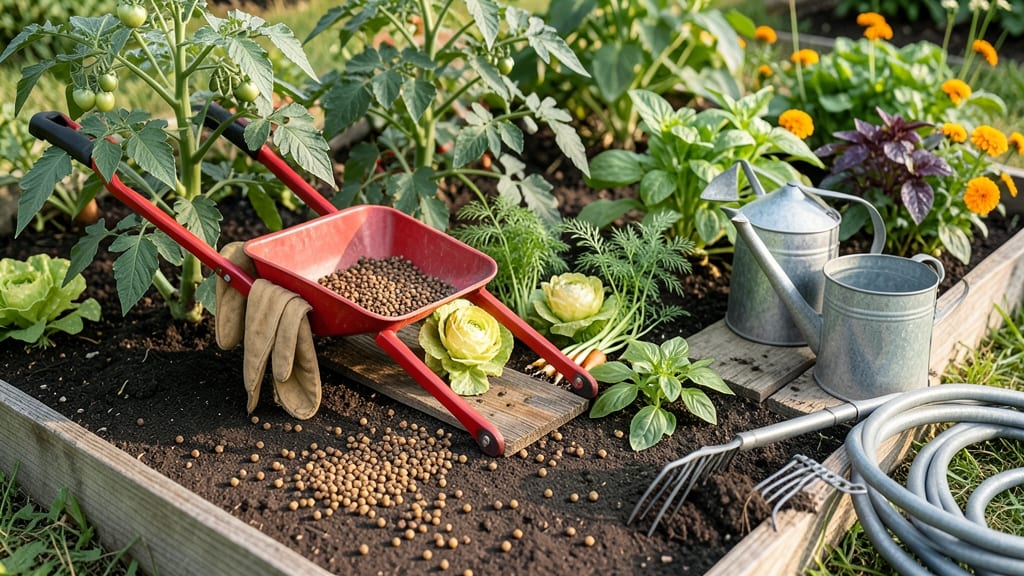
The best time to fertilize your garden aligns with your plants' growth cycles—spring awakening and fall prep are the two golden windows that set the stage for a thriving season.
Timing your garden fertilization can mean the difference between lush, thriving plants and struggling ones that barely survive—so when exactly should you feed your soil for maximum impact? Too early, and you risk burning tender roots; too late, and you miss the chance to fuel explosive growth.
I’ve learned the hard way that a single misstep can leave your 🌱 General Garden playing catch-up all season.
Spring is your first critical window, starting 4-6 weeks before planting to jumpstart root development, then again at transplanting and during active growth. But fall?
That’s where most gardeners drop the ball—yet feeding in late summer or early fall strengthens roots for next year, especially in USDA Zone 6a, where winters demand extra prep.
Below, I break down the science-backed schedule for spring and fall, plus the red flags that tell you to stop fertilizing—because sometimes, your plants are telling you to pause.
You’ll leave knowing exactly when to feed, what to feed, and how to avoid the costly mistakes that waste nutrients (and your time).
Spring fertilization timing: the 3 critical phases for plant growth
Spring is when your garden truly comes alive, but timing your fertilization correctly can make or break your plants' success. Too early, and nutrients get wasted; too late, and your plants miss critical growth spurts.
The key lies in understanding your garden's three growth phases—each with its own ideal fertilization window. Let's break down when to feed your soil for maximum impact, whether you're growing vegetables, flowers, or ornamental plants.
Most gardeners focus on spring planting but overlook how soil temperature and plant activity dictate the best times to fertilize. For example, cool-season crops like lettuce and peas need early feeding, while warm-season tomatoes and peppers thrive when soil warms.
I'll show you how to align your fertilization schedule with these natural cues for stronger, healthier plants all season long.
- 1 Early Spring (Pre-Planting): 4-6 weeks before planting when soil temps reach 45-50°F. Focus on organic matter like compost to wake up soil microbes.
- 2 Late Spring (Active Growth): 2-4 weeks after planting when new growth appears. Use a balanced fertilizer (10-10-10) for vegetables or low-nitrogen for flowers.
- 3 Early Summer (Maintenance): Every 4-6 weeks during peak growth. Switch to slow-release fertilizers to prevent nutrient burn.
Your first fertilization should happen in early spring, about 4-6 weeks before planting. This is when soil temperatures typically reach 45-50°F in most USDA zones, signaling that microbes are waking up and ready to break down organic matter.
For vegetable gardens, I recommend working in 2-3 inches of compost or a balanced organic fertilizer like fish emulsion. This jumpstarts nutrient availability just as your plants begin their growth cycle.
For ornamental plants and perennials, early spring is also the time to apply a slow-release fertilizer like bone meal or alfalfa meal. These provide steady nutrients without the risk of burning tender roots.
I've found that roses and daylilies respond exceptionally well when fed at this stage, producing stronger stems and more vibrant blooms later in the season.
The second critical window comes in late spring, about 2-4 weeks after planting. By this time, your plants should show signs of active growth, like new leaves or flower buds.
This is when you want to apply a balanced fertilizer (with equal parts nitrogen, phosphorus, and potassium, like 10-10-10) for vegetables. For flowers, opt for a low-nitrogen formula to encourage blooming rather than leafy growth.
I always use this phase to side-dress my tomato plants with a handful of compost or a sprinkle of 5-10-10 fertilizer about 2 inches from the stem.
The key is to avoid direct contact with plant stems, which can cause fertilizer burn. Water thoroughly after applying to help nutrients penetrate the soil.
As we transition to early summer, your plants enter their maintenance phase, where consistent feeding keeps them thriving. This is when I switch to a slow-release fertilizer or organic options like worm castings.
For lawns, I apply a high-nitrogen fertilizer every 6-8 weeks, while vegetable gardens benefit from a potassium-rich boost (like 0-0-50) to support fruiting.
One common mistake I see is fertilizing too heavily during heatwaves. When temperatures exceed 85°F, plants struggle to absorb nutrients efficiently, leading to burnt foliage.
Instead, I recommend light feeding with a water-soluble fertilizer during these periods or switching to foliar sprays that provide nutrients directly to leaves.
To make fertilization even more effective, I always test my soil in early spring using a simple home test kit. This helps me determine if my soil is deficient in nitrogen, phosphorus, or potassium, allowing me to tailor my fertilizer choices.
For example, if my soil test shows low phosphorus, I'll add bone meal to promote root and flower development.
Remember, the goal of spring fertilization isn't just to feed your plants—it's to build strong root systems that can support healthy growth all season. By following these three phases, you'll give your garden the best possible start, ensuring vibrant blooms, bountiful vegetables, and lush foliage from spring through summer.
Fall fertilization secrets: how late-season feeding boosts root strength
Fall fertilization might seem counterintuitive when your garden appears dormant, but this is when you give your plants their secret weapon for next year’s success. As temperatures drop, plants shift focus from foliage to root development, making late-season feeding critical for establishing a strong foundation.
I’ve seen perennials and lawns thrive for years because of this often-overlooked step.
Unlike spring when we chase rapid growth, fall fertilization prioritizes slow-release nutrients that roots can absorb before dormancy. Think of it as a dormant-season prep strategy—giving your plants the energy reserves they’ll need to burst forward in spring. The key? Timing it 6-8 weeks before first frost in most climates.
| Season | Best Fertilizer Type | NPK Ratio | Application Method | Key Benefit |
|---|---|---|---|---|
| Spring | Quick-release (synthetic or compost) | 10-10-10 or 5-10-10 | Soil incorporation | Fast foliage growth |
| Fall | Slow-release (organic) | 5-10-10 or 3-4-6 | Top-dressing or side-dressing | Root system expansion |
| Lawns (Fall) | High-nitrogen (fall blend) | 24-0-5 or 30-0-4 | Broadcast spread | Deep root establishment |
| Bulbs (Fall) | Bone meal or compost | 3-12-9 (phosphorus-rich) | Planting hole mix | Flower bud formation |
For perennials, I recommend organic options like composted manure or worm castings—they release nutrients gradually as soil temperatures drop.
These feed roots without encouraging tender new growth that frost could damage. Bulbs, like tulips and daffodils, need phosphorus-heavy fertilizers (like bone meal) to build next year’s flower buds.
Lawns benefit most from fall feeding with a high-nitrogen fertilizer (look for 24-0-5 ratios). This helps grass roots grow deep before winter, making them drought-resistant when spring arrives. I’ve seen cool-season grasses like fescue and ryegrass thicken dramatically after just one fall feeding session.
Pro tip: Water thoroughly after applying fall fertilizer to help nutrients penetrate the soil. Avoid fertilizing within 2 weeks of frost—plants won’t have time to process nutrients before dormancy sets in. This is where many gardeners go wrong, thinking "out of sight, out of mind" means no action needed.
Don’t underestimate the power of mulching after your fall feeding. A 3-inch layer of organic mulch (like shredded leaves or straw) insulates roots and slowly breaks down, adding nutrients exactly when plants need them in early spring. It’s like giving your garden a cozy blanket with built-in fertilizer!