
Picking
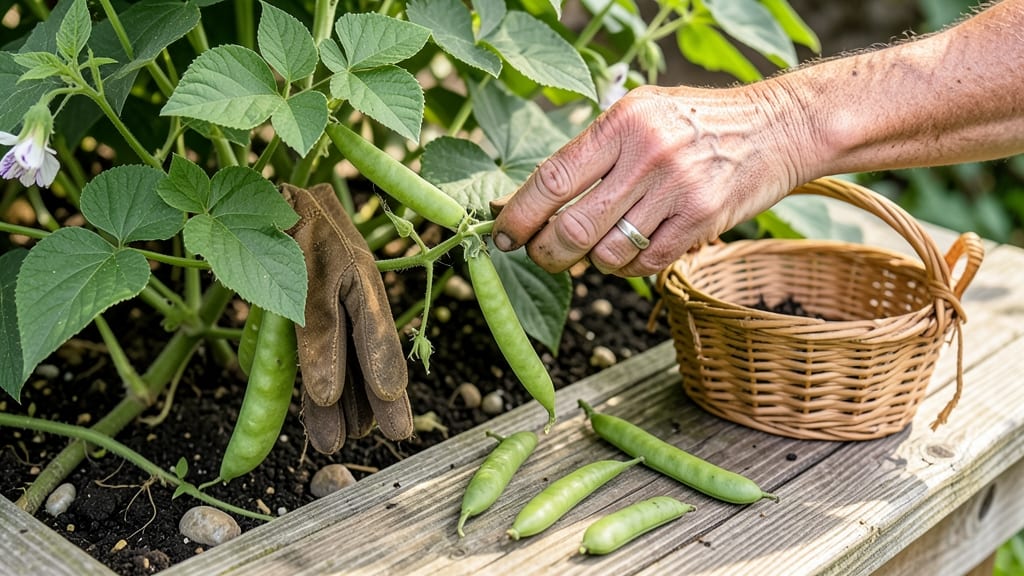
To pick green beans from your garden at the perfect moment means harvesting crisp, flavorful pods every time — and missing that window turns them tough and stringy.
You might be tempted to wait for the biggest beans, but that’s when they start losing their tenderness. The key is catching them at 4-6 inches long, when they snap easily and the seeds are just visible but not bulging.
Environmental factors like warm days and cool nights can speed up maturity, so check your plants every 2-3 days during peak season. A quick glance at the pods tells you everything you need to know.
In this guide, I’ll walk you through the 3 visual cues that guarantee peak flavor, how often to harvest for continuous production, and what happens if you pick too early or too late.


3 Visual cues to identify perfectly ripe green beans
Knowing exactly when to pick green beans transforms your harvest from bland to burstingly fresh. The secret lies in three simple visual cues that tell you the pods are at their peak—just crisp enough to snap and packed with sweet flavor.
Ignore these signs, and you risk ending up with tough, fibrous beans that taste more like wood than vegetables.
First, let's talk about pod size. This is your most reliable indicator because green beans grow rapidly once they start forming. When pods reach 4 to 6 inches in length, that's your sweet spot.
Any shorter, and you're likely picking too early, which means smaller yields and less flavor development. But wait too long past this stage, and the pods will start to toughen up.
Next, examine the color and texture of the pods. Perfectly ripe green beans should be a vibrant deep green color, not pale or yellowing. When you gently squeeze a pod, it should feel firm and crisp, almost snapping when bent slightly at the stem.
If it feels soft or spongy, it's past its prime. This texture test is especially important for varieties like Blue Lake or Contender, which are prized for their tenderness.
Finally, check the seed development inside the pod. At the ideal picking time, you should be able to see the seeds through the pod's skin, but they shouldn't be fully formed or bulging. When seeds are clearly visible but still small, that's your cue to harvest.
If you see large, plump seeds, the bean has already started to dry out, and the pod will become tough and stringy.
🌱 Your Green Bean Harvest Checklist
- 1. Pod Length: 4-6 inches is perfect—any shorter means underripe, any longer means overripe.
- 2. Color & Texture: Bright deep green pods that snap easily when bent—this means peak crispness.
- 3. Seed Visibility: Seeds should be visible but not bulging—this guarantees maximum tenderness and flavor.
Pro Tip: Use these cues together for the most accurate timing—don't rely on just one factor!
Here's a little secret I learned from my neighbor's 80-year-old gardener: the best time to pick is early morning when the pods are cool and crisp. This is when their natural sugars are at their peak.
If you're harvesting in the heat of the day, the pods can lose some of their crispness almost immediately, so try to get them into the fridge or your kitchen as soon as possible.
For pole beans, which climb trellises, you'll want to check the pods regularly because they tend to mature faster than bush beans. With pole beans, you might need to harvest every 2-3 days to keep up with production, while bush beans can often wait 3-4 days between harvests.
The key is consistency—regular picking encourages the plants to produce more beans throughout the season.
One common mistake I see in gardens is waiting until the pods turn yellow or brown before picking. By this stage, the beans are often woody and bitter, and the plant's energy has already shifted toward seed production.
The good news is that green beans are self-pollinating, so even if you miss the perfect window once, the plant will keep producing flowers that can develop into new pods for another harvest.
If you're growing heirloom varieties like Kentucky Wonder or Rattlesnake beans, pay extra attention to these visual cues because heirlooms often have more variation in size and color.
Some heirloom pods might be ready to pick when they're slightly curved or have a waxy sheen, which is another sign of perfect ripeness in these varieties.
Remember, the more frequently you harvest at the right stage, the more your green bean plants will produce. It's like giving them a little nudge to keep making new pods instead of letting them go to seed.
And when you follow these visual cues, you'll be rewarded with beans that are crisp, sweet, and full of garden-fresh flavor—exactly what you want from your homegrown harvest. 🌱
How often you should pick green beans for continuous harvest
Consistent harvesting is the secret to a never-ending supply of fresh green beans. When you pick at the right intervals, your plants will keep producing new pods instead of letting them turn tough and woody.
For most varieties, harvesting every 2-3 days during peak production is ideal—this matches how quickly beans mature after flowering.
However, the frequency depends on your bean type. Pole beans grow faster and need more frequent picking—sometimes every 1-2 days—because they produce pods along their entire length. Bush beans, on the other hand, can handle 3-4 days between harvests since they produce pods in clusters that mature more slowly.
Here's what happens when you skip harvests: the plant stops producing new flowers, and all its energy goes into thickening the existing pods. Before you know it, you're left with a bush full of stringy, overgrown beans instead of the crisp harvest you wanted.
Regular picking signals the plant to keep flowering and setting new pods.
⚠️ Warning: Overripe Beans Signal Production Stop
If you see yellowing pods or brown seeds developing, your plant has already shifted its energy away from new production. This is your last chance to harvest before the plant goes dormant for the season.
🌱 Pro Tip: Set a weekly reminder to check your plants—consistency is key to continuous harvests!
For maximum production, I recommend harvesting in the morning when pods are cool and crisp. This gives you the freshest beans and prevents the plant from overheating during the day.
If you're growing heirloom varieties like Kentucky Wonder, you might need to harvest even more frequently since they often produce larger pods that mature faster.
Don't forget to check the undersides of leaves and along the stems—this is where beans often hide! I've found that using a small pair of pruning shears makes quick work of harvesting, especially for pole beans growing up tall trellises.
Always pick the entire pod by grasping it near the stem to avoid damaging the plant.
As the season progresses, you'll notice your plants start producing fewer pods. This is normal—green beans typically produce for about 6-8 weeks before slowing down. To extend your harvest, try succession planting every 2 weeks after your initial planting.
This staggered approach ensures you have fresh beans coming in all summer long.