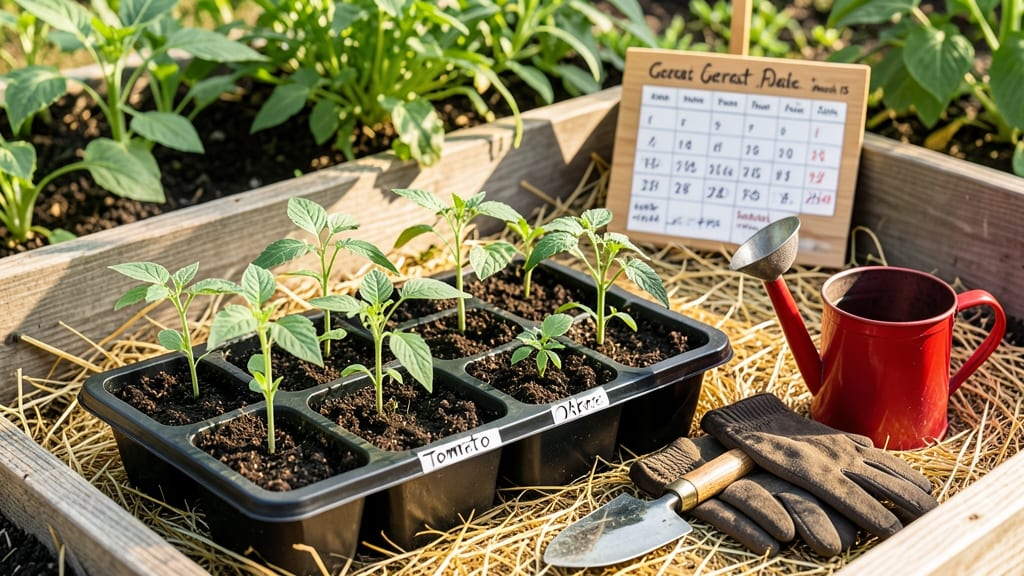
Planting your garden in Georgia at the right time means the difference between a thriving harvest and a fight against heat, pests, or stunted growth.
Georgia’s diverse climate—from humid subtropical to mountainous highlands—means your garden’s success hinges on planting at the perfect time. Get the wrong timing, and you’ll battle pests, heat stress, or stunted growth. But master these zone-specific windows, and you’ll enjoy a year-round harvest that rivals professional farms.
Whether you’re in the Coastal Plain or the Piedmont, the key is knowing when to start seeds indoors, when to transplant tender seedlings, and which crops thrive in Georgia’s 7a-9a zones. Miss the window, and you might end up with bolted lettuce or wilting tomatoes—no one wants that!
In this guide, I’ll break down the month-by-month planting schedule for Georgia, including frost dates, soil prep tips, and how to extend your growing season. You’ll learn exactly when to plant 🌱 General Garden Plants (Georgia)—from cool-season greens in early spring to heat-loving tomatoes in late summer.
🌱When to Plant General Garden Plants (Georgia) Garden Plants (Georgia)
Jan❄️
Feb🌱
Mar🌱
Apr🌱
May🌱
Jun🌱
Jul🌱
Aug🌱
Sep🌱
Oct🌱
Nov🍂
Dec❄️
Ideal Time
Also Good
Georgia planting calendar by USDA zones 7-8: month-by-month breakdown
Georgia’s USDA Zones 7-8 offer a unique gardening advantage—long growing seasons with 200-240 frost-free days. But timing is everything. Plant too early, and cool-season crops bolt in the heat. Plant too late, and warm-season staples struggle with fall frosts.
My calendar breaks down the ideal transplant windows for vegetables, flowers, and herbs, accounting for soil temperatures and microclimate variations between North Georgia’s Zone 7 and South Georgia’s Zone 8.
For Zone 7 (North Georgia, including Atlanta and the Blue Ridge Mountains), expect last frost dates between late March and early April. Zone 8 (South Georgia, including Savannah and Macon) enjoys a 2-3 week earlier start, with first frosts arriving in mid-November instead of late October.
Tropicals like hibiscus and ginger thrive year-round in Zone 8, while Zone 7 gardeners must treat them as annuals or overwinter them indoors.
Key rule: Always check soil temperature before planting—warm-season crops like tomatoes need 60°F+ soil, while cool-season crops like kale tolerate 40°F+. Use a soil thermometer to avoid guesswork. Below is your month-by-month guide, organized by planting season and crop type.
Plant warm-season crops after last frost (tomatoes, peppers)
Direct sow beans and squash
60°F+
Mulch to retain moisture and prevent weeds
April
Succession plant lettuce and spinach
Transplant herbs (basil, cilantro)
65-75°F
Watch for aphids on new growth
May-June
Plant okra and sweet potatoes
Direct sow fall crops (turnips, collards)
70-85°F
Drip irrigation essential in heat
July-August
Start cool-season seeds indoors for fall
How to adjust planting times for Georgia’s microclimates (mountains vs. coastal plains)
Georgia’s dramatic elevation shifts—from the Blue Ridge Mountains in the north to the coastal plains near Savannah—create two wildly different gardening worlds. In Zone 7 (North Georgia), frost lingers until mid-April, while Zone 8 (South Georgia) enjoys frost-free conditions by mid-March.
These differences mean your tomato seedlings might thrive in one region but wilt in another if planted at the wrong time.
Elevation isn’t just about frost—it also affects soil warmth and humidity levels. Mountain gardens face cooler nights and faster-draining soils, while coastal areas battle high humidity and soil saturation.
For example, okra and sweet potatoes—heat-loving staples—can be direct-sown in Zone 8 by early April, but mountain gardeners should wait until mid-May to avoid transplant shock.
Here’s how to align your planting schedule with Georgia’s microclimates, including frost-free date comparisons and season-extending hacks for both regions:
Factor
North Georgia (Zone 7)
South Georgia (Zone 8)
Adjustment Tip
Last Frost Date
Mid-April
Mid-March
Wait 2 weeks after last frost in mountains; start cool-season crops in Zone 8 by February.
First Frost Date
Early November
Mid-November
Use row covers in Zone 7 to extend fall harvests; Zone 8 can grow winter greens until December.
Soil Warms to 60°F
Late April
Early April
Plant warm-season crops like peppers and cucumbers 2 weeks later in Zone 7.
Humidity Risk
Low (drier air)
High (fungal diseases)
Space plants wider in Zone 8 for airflow; use drip irrigation to avoid leaf wetness.
Season-Extending Tool
Cold frames
Shade cloth (30-50%)
Zone 7: Start spinach in cold frames by September; Zone 8: Protect okra with shade in July-August.
Heat-Tolerant Swap
‘Cherokee Purple’ tomatoes
‘Celebrity’ tomatoes
Zone 7: Choose earlier-maturing varieties; Zone 8: Opt for disease-resistant hybrids.
For North Georgia gardeners, prioritize early spring crops like kale and carrots in March, then shift to heat-loving plants after May 15. Use black plastic mulch to warm soil faster in cooler microclimates.
In contrast, South Georgia’s longer growing season allows for two full harvests of collard greens—one in spring and another in fall.
Don’t overlook microclimates within regions. A south-facing slope in the mountains might be 2-3 weeks ahead of a valley garden, while a shaded backyard in Savannah could delay planting by 1-2 weeks.
Observe your garden’s unique conditions for 3 years to refine your schedule—note when azalea blooms (a natural frost indicator) or when soil reaches 60°F.
Pro tip: Start seeds indoors in Zone 7 by mid-February for tomatoes and peppers, giving them a 6-8 week head start. In Zone 8, direct-sow beans and squash as soon as soil is workable—often by mid-February.
With these adjustments, you’ll turn Georgia’s climate quirks into year-round growing advantages.