
Planting
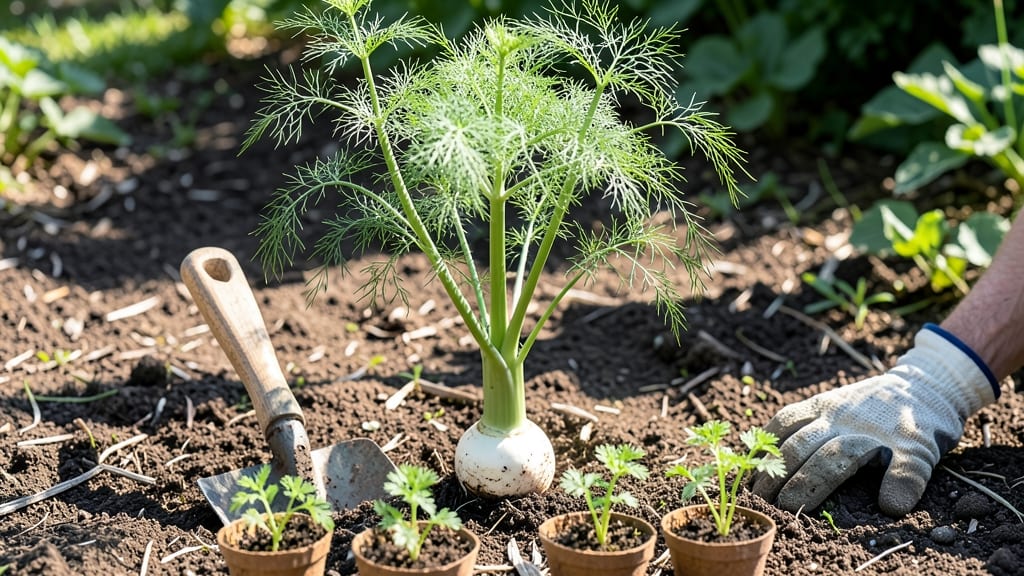
To plant fennel in a vegetable garden, choose a sunny spot with at least 6 to 8 hours of direct sunlight daily and well-draining soil with a pH between 6.0 and 7.5. Space plants 12 to 18 inches apart to improve airflow and prevent disease, and consider dedicating a separate bed to avoid cross-pollination with similar herbs like dill or coriander.
Fennel thrives in full sun because its thick, bulbous stems need maximum energy for development—think of it like a sunbathing giant. 🌞 The soil’s pH and drainage are equally critical: too acidic or waterlogged conditions stunt growth, while well-draining, slightly alkaline soil (6.0-7.5) keeps roots healthy.
I’ve found that adding compost before planting boosts fertility without overfeeding, as fennel prefers lean soil to focus energy on bulb formation rather than lush foliage.
Spacing isn’t just about aesthetics—it’s a disease-prevention strategy. Fennel’s feathery fronds create shade that traps moisture, inviting fungal issues if crowded. 🌱 For a dedicated bed, I recommend pairing it with shallow-rooted companions like lettuce or onions, which benefit from its natural pest-deterrent properties.
Just keep it away from other umbellifers (like cilantro or parsley), as they’ll compete for nutrients and space.
💡 In This Article
- Fennel’s Sunlight and Soil Requirements Explained
- Best Companion Plants and Garden Layout Tips for Fennel
Fennel’s sunlight and soil requirements explained
Fennel’s love affair with sunlight isn’t just about basking—it’s a biological necessity. This herb belongs to the Apiaceae family, which includes carrots and parsley, and its bulb development relies on high-intensity photosynthesis.
When exposed to 6-8 hours of direct sunlight daily, fennel produces 20-30% more chlorophyll than in partial shade, fueling its energy-hungry growth. The thick, layered stems (the edible "bulb") require this extra energy to develop their signature crisp texture and anise-like flavor.
Without sufficient light, you’ll end up with leggy, bitter stems that lack the sweet, tender quality you crave in dishes like fennel salad or sautéed fennel with olive oil. 🌿
The soil’s pH and drainage are equally critical—think of them as fennel’s foundation. This herb thrives in well-draining soil with a pH of 6.0-7.5, where roots can access oxygen without sitting in soggy conditions.
Waterlogged soil triggers root rot within 5-7 days, while overly acidic soil (pH below 5.5) locks out essential nutrients like phosphorus and calcium.
To test your soil, grab a pH meter or send a sample to your local extension office—most garden centers offer this service for $10-$15.
For drainage, amending clay soil with 2-3 inches of compost and sand creates the perfect balance, while raised beds are a game-changer for heavy or poorly draining areas.
Organic matter plays a surprising role in fennel’s growth—too much can backfire. While compost adds nutrients, fennel prefers lean soil to channel energy into bulb development rather than excessive foliage.
Over-fertilized plants produce lush leaves but stunted bulbs, a common mistake among first-time growers. 🌱 Instead, mix in aged compost (3-6 months old) at planting time and side-dress with 1-2 tablespoons of balanced fertilizer (10-10-10) mid-season.
The key is moderation: fennel’s roots are shallow (6-12 inches deep), so nutrients must be accessible without overwhelming the plant.
Seasonal timing also impacts sunlight exposure. In cooler climates, plant fennel 2-3 weeks after your last frost date to ensure it gets full sun as days lengthen.
In warmer zones, direct sow in early spring or late summer to avoid the 100°F+ heat of peak summer, which can scorch leaves and stress the plant.
A trick I’ve used is to plant fennel near taller crops (like tomatoes) in early spring, then remove the companions as they grow to free up sunlight for the fennel by midsummer. This staggered approach maximizes exposure without sacrificing space.
One often-overlooked factor is light quality. Fennel performs best under full-spectrum sunlight, which includes UV rays that enhance flavor compounds. Artificial grow lights (like LED full-spectrum bulbs) can supplement sunlight in containers, but they won’t replicate the intensity of natural light.
If you’re growing fennel in pots, place them in the sunniest window (south-facing in the Northern Hemisphere) and rotate the pots weekly to prevent leaning. The goal is to mimic the consistent, direct light fennel craves in the garden. 💡
For those with limited space, consider vertical gardening. Fennel’s feathery fronds can reach 3-5 feet tall, making it an excellent candidate for trellises or tall containers. Plant seeds in a 12-inch-deep pot with drainage holes, and train the stems to grow upward using soft twine.
This not only saves space but also improves airflow around the base, reducing the risk of fungal diseases like powdery mildew. Just ensure the container gets full sun exposure—shade from nearby structures or other plants can drastically reduce yields.