
Tools
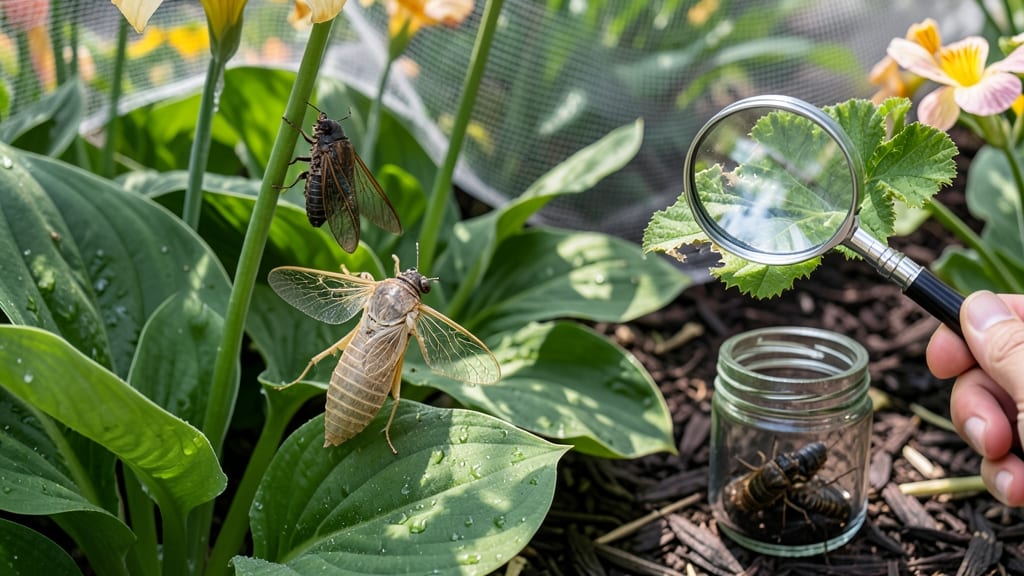
Your garden won’t be eaten by cicadas—they target tree sap and roots, not vegetables or flowers. While their nymphs can damage young tree roots and adults may strip bark, they completely ignore most garden plants. Prioritize protecting trees over veggies or blooms.
Cicadas have a very specific diet that focuses entirely on trees, leaving your garden plants untouched. 🌳 Their nymphs spend years underground feeding on tree roots, which can stress young saplings, while adult cicadas pierce bark to drink sap. The good news?
They show zero interest in vegetables, herbs, or flowers—they’re not even on their menu. If you notice sudden bark damage or wilting young trees, that’s your cue to take action, but your tomatoes and marigolds will stay completely safe.
What sets cicadas apart is their lifecycle: they emerge only every 13 or 17 years, making infestations temporary but intense during those periods.
The key to protecting your garden lies in monitoring tree health—especially young specimens—and using physical barriers like mesh wraps or organic sprays like neem oil to deter them from establishing themselves.
💡 In This Article
- What Cicadas Actually Consume: Tree Sap vs Garden Plants
- Protecting Trees and Gardens from Cicada Damage
What cicadas actually consume: tree sap vs garden plants
Cicadas have evolved a highly specialized diet centered around trees, with their feeding habits tied directly to their life cycle stages. The nymphs, which live underground for years, use sharp mandibles to pierce tree roots and extract xylem sap—the plant's nutrient-rich water transport system.
This process weakens young trees by disrupting their water flow, but mature trees with thicker bark can often withstand the damage. Adult cicadas take this one step further by using their elongated beaks to pierce bark and access the same sap, leaving behind telltale holes and sticky residue.
The reason cicadas completely ignore garden plants like vegetables, herbs, or flowers comes down to biology. Their mouthparts are perfectly adapted for tapping into tree xylem vessels, which are typically 0.02-0.05 millimeters wide—far too narrow for their equipment to penetrate the broader, softer tissues of garden plants.
Even their nymphs, which feed on roots, target the deep, woody roots of trees rather than the fibrous root systems of vegetables. This specialization means your prized tomatoes or delicate roses won't even register on their menu. 🌿
What makes this even more fascinating is how cicadas locate their tree hosts. They rely on chemical cues in the air, specifically volatile organic compounds emitted by stressed trees. When a tree's defenses are compromised—perhaps from drought or poor soil—the cicadas detect these signals and home in.
This explains why you might see cicada activity concentrated around certain trees in your yard, while others remain untouched. The key takeaway? Cicadas are tree specialists, not generalist garden pests.
However, there are exceptions worth noting. While cicadas won't eat your garden plants, they can still create indirect problems. For instance, the sticky honeydew they produce while feeding can attract ants, which may then march into your garden.
Additionally, the sheer volume of cicadas during emergence can create a thick carpet of shed exoskeletons that might temporarily smother nearby plants. But these are secondary effects—not direct feeding damage. The primary concern remains protecting vulnerable trees rather than your vegetable patch.
Understanding this feeding behavior helps explain why cicada infestations create such dramatic scenes in forests but leave home gardens largely unaffected.
The ecological balance is fascinating: these insects play a crucial role in nutrient cycling by redistributing tree sap through their waste, but their specialized diet means gardeners can focus their protective efforts where they're truly needed—on the trees themselves.
This targeted approach saves time and resources compared to treating an entire garden.
The lifecycle timing adds another layer to this story. Periodical cicadas, which emerge every 13 or 17 years, synchronize their emergence to overwhelm predators, creating those iconic mass appearances. During these events, you might see unprecedented tree damage, but between broods, cicadas remain relatively benign.
This temporal pattern means gardeners in non-outbreak years can completely ignore cicadas, while those in affected areas need only focus on tree protection for 2-4 weeks during emergence.