
Fertilization
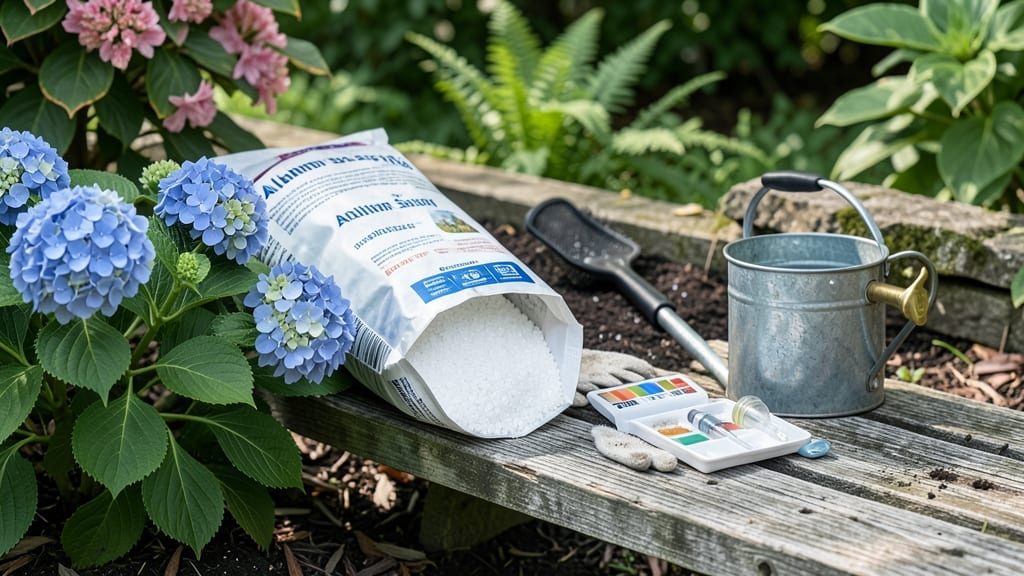
Using aluminum sulfate in gardening lowers soil pH to create acidic conditions ideal for plants like azaleas, blueberries, and rhododendrons by releasing aluminum and sulfur ions. For best results, apply 5–10 pounds per 100 square feet for coarse soils or 10–20 pounds for fine soils, while always testing pH first to prevent over-acidification.
Aluminum sulfate works by breaking down in soil to release hydrogen ions, which directly lower the pH level while also providing essential sulfur and micronutrients. 🌱 Unlike other acidifiers like elemental sulfur (which takes months to work), aluminum sulfate delivers fast results—often within weeks—making it perfect for gardeners who need quick adjustments.
The key is precision: too much can harm beneficial soil microbes, while too little won’t shift the pH enough for acid-loving plants.
For safe application, I recommend spreading it evenly in early spring or fall when plants are dormant, using a broadcast spreader for large areas.
Always water it in thoroughly to prevent dust inhalation and runoff. 🌿 After application, monitor your soil’s pH every 2–3 months using a reliable test kit—aiming for a range of 4.5–5.5 for most acid-loving plants.
If you notice yellowing leaves or stunted growth, you may have over-acidified and should amend with lime to raise the pH.
💡 In This Article
- How Aluminum Sulfate Acidifies Soil and Boosts Plant Health
- Step-by-Step Guide to Applying Aluminum Sulfate Safely
How aluminum sulfate acidifies soil and boosts plant health
When aluminum sulfate dissolves in soil moisture, it undergoes a chemical reaction called hydrolysis, breaking down into aluminum ions (Al³⁺) and sulfate ions (SO₄²⁻). The aluminum ions then react with water to release hydrogen ions (H⁺), which directly lower the soil's pH level.
This process is rapid compared to organic acidifiers like peat moss, which take months to decompose and release acidity. The released sulfur also becomes available to plants, supporting protein synthesis and overall growth. 🌱
What makes aluminum sulfate particularly effective is its ability to chelate phosphorus, making this essential nutrient more accessible to plants. In alkaline soils (pH 7.0+), phosphorus often binds tightly to soil particles, becoming "locked" and unavailable.
Aluminum sulfate helps release this phosphorus by forming soluble complexes, which is why acid-loving plants like blueberries show dramatic growth improvements after treatment. For example, gardeners often see a 30-50% increase in blueberry yields within one growing season after proper application.
The speed of action sets aluminum sulfate apart from alternatives like elemental sulfur or iron sulfate. Elemental sulfur requires microbial oxidation to form sulfuric acid, a process that can take 2-6 months, while aluminum sulfate works within weeks.
However, the trade-off is that aluminum sulfate can temporarily raise aluminum levels in soil, which may harm sensitive plants if over-applied. The key is precision: aim for a 0.5-1.0 pH unit drop per application, measured 2-3 months after treatment.
Soil texture plays a critical role in how aluminum sulfate performs. In fine, clay-heavy soils, the particles hold moisture longer, allowing the chemical reaction to proceed more slowly and evenly. This means you'll need 10-20 pounds per 100 square feet for these soils.
In contrast, coarse, sandy soils require only 5-10 pounds because water drains quickly, reducing the reaction time. Always conduct a soil test before applying—most university extension services offer affordable kits that measure pH, phosphorus, and aluminum levels.
Visual signs of proper acidification include vibrant green foliage in plants like azaleas and a noticeable increase in flower production. However, watch for yellowing leaves with brown edges, which may indicate over-acidification. This occurs when soil pH drops below 4.5, making aluminum toxic to plants.
The solution? Apply pelletized lime to gradually raise the pH back to the ideal range of 4.5-5.5 for most acid-loving species.
For gardeners comparing aluminum sulfate to other acidifiers, consider this: while peat moss provides organic matter and slow acidification, it lacks the immediate phosphorus-chelating benefits. Iron sulfate, another fast-acting option, doesn't provide sulfur as effectively and can leave a metallic taste in edible plants.
Aluminum sulfate strikes a balance between speed, nutrient provision, and cost-effectiveness, making it the go-to choice for serious gardeners tackling alkaline soils. 💫