
Fertilization
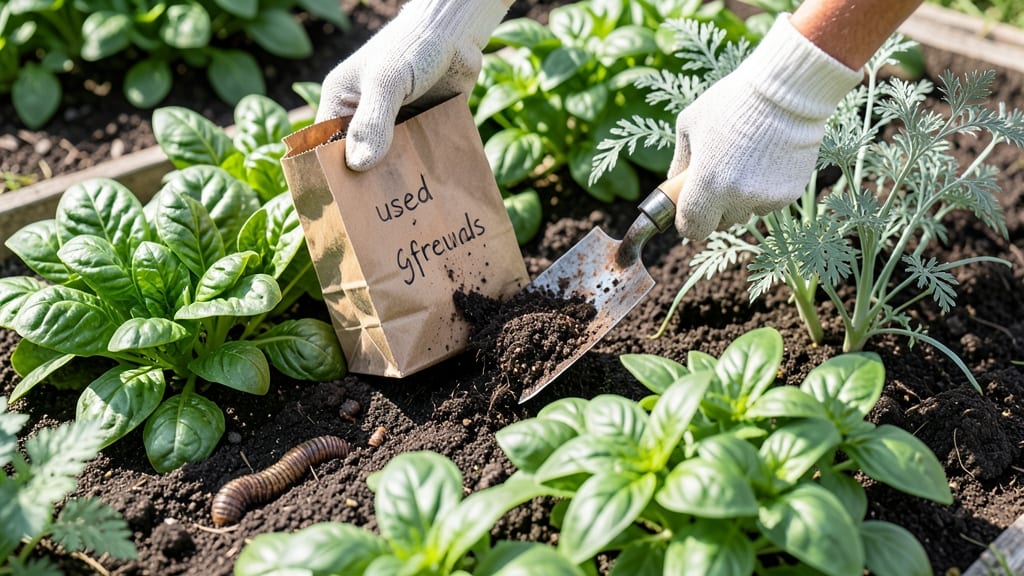
Coffee grounds in the vegetable garden act as a natural fertilizer by adding nitrogen-rich organic matter, deter pests like slugs and ants, and help prevent weeds while boosting beneficial soil microbes—just use them in moderation to avoid making the soil too acidic.
These used coffee grounds work like a slow-release fertilizer because the nitrogen in them breaks down gradually, feeding plants over time. 🌱 The caffeine content also acts as a natural pest repellent, keeping unwanted critters away from your veggies.
I've found that mixing them into compost piles or sprinkling them lightly around plants (about 1/4 cup per plant) gives the best results without harming your garden's pH balance.
For best results, I recommend composting the grounds first—this reduces acidity and makes the nutrients more accessible to plants. Fresh grounds can actually lower soil pH too much, which might stunt growth in sensitive plants like tomatoes or peppers.
The key is balance: too much can create a coffee-scented, acidic environment that repels helpful worms and microbes.
💡 In This Article
- How Coffee Grounds Improve Soil Health
- Best Practices for Applying Coffee Grounds in Gardens
How coffee grounds improve soil health
Coffee grounds work as a natural fertilizer because they're rich in nitrogen—a key nutrient plants need for lush growth. When coffee breaks down, it releases this nitrogen slowly, feeding your plants over weeks rather than all at once.
This gradual release mimics how organic fertilizers like compost work, providing steady nutrition without burning plant roots. The breakdown process also releases other beneficial compounds like potassium and phosphorus, though in smaller amounts.
What makes coffee grounds unique is their ability to stimulate soil microbes. These tiny organisms help break down organic matter, creating a thriving ecosystem that improves soil structure and nutrient availability.
Fresh grounds contain caffeine (about 1-2% by weight), which acts as a natural fungicide, suppressing harmful pathogens while encouraging beneficial bacteria. The texture of grounds also creates tiny air pockets in the soil, improving drainage and aeration—similar to how perlite works in potting mixes.
The pH effects are where most gardeners need caution. Fresh coffee grounds have a pH of about 4.85-5.10, making them acidic. While this can help acid-loving plants like blueberries or potatoes, it may harm others like tomatoes or peppers that prefer neutral to slightly alkaline soil (pH 6.0-7.0).
Composting grounds first reduces their acidity by about 30-50%, making them safer for most vegetable gardens. The key is monitoring your soil's pH—most home test kits can tell you if you're heading toward over-acidification.
Here's how the breakdown works chemically: The organic compounds in coffee grounds undergo microbial decomposition through a process called mineralization. First, bacteria and fungi colonize the grounds, breaking down complex organic molecules into simpler forms. This releases nitrogen in the form of ammonium (NH₄⁺), which plants can absorb directly.
Over time, nitrifying bacteria convert this to nitrate (NO₃⁻), the form most plants prefer. This two-step process ensures plants get a steady supply of nitrogen without sudden spikes that could harm delicate root systems.
For comparison, 1 cup of used coffee grounds contains roughly 0.5-1 gram of nitrogen, similar to what you'd get from 1/4 cup of blood meal (a common organic fertilizer). However, coffee grounds also provide additional benefits like improved soil structure and pest deterrence that blood meal doesn't offer.
The caffeine content, while small, creates an environment that repels slugs and ants—pests that would otherwise feast on your vegetable leaves. This makes coffee grounds a dual-purpose amendment that both feeds your plants and protects them.
The texture difference between fresh and composted grounds matters too. Fresh grounds are coarse and granular, which can initially slow water absorption. Composted grounds, however, become finer and more homogeneous, integrating smoothly into soil.
This is why many gardeners prefer to compost coffee grounds for 3-6 months before using them directly in garden beds. The composting process also eliminates any potential mold risks from fresh grounds, which can occur if they're too wet or piled too thickly.