
Landscaping
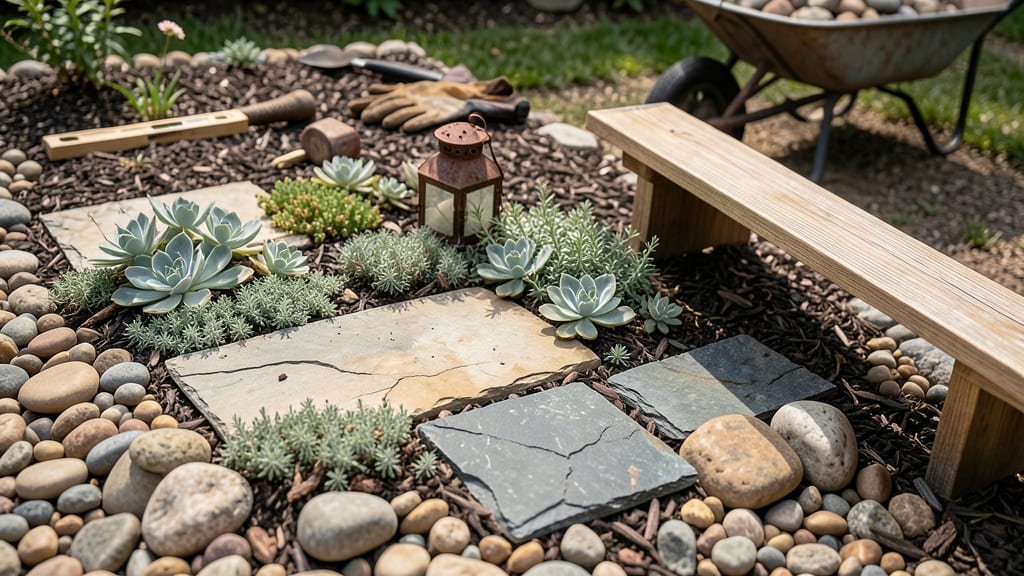
Garden ideas using stones transform outdoor spaces by creating natural pathways, borders, and focal points that bring texture, contrast, and visual elegance. Flat stones work perfectly for stepping stones, while rounded river rocks add organic ground cover, and stacked slate delivers a sleek, modern look. Pairing them with plants creates a harmonious, low-maintenance landscape that thrives year-round.
Stones aren't just functional—they're a game-changer for visual impact. 🔥 The right selection can instantly elevate a garden's aesthetic, whether you're aiming for a rustic retreat or a contemporary oasis.
For instance, smooth river rocks create a Zen-like atmosphere when paired with moss and ferns, while irregularly shaped field stones add organic charm to cottage-style gardens. What's fascinating is how stone colors interact with plants: cool grays complement lush greenery, while warm sandstones harmonize with golden perennials.
The key is balancing form and function—durability matters just as much as beauty.
Beyond aesthetics, stones solve practical problems like drainage and erosion. Flat flagstone pathways prevent muddy footprints while adding structure, and stacked stone borders contain soil while creating clean lines.
I always recommend testing stone weight first—lighter options like slate are easier to install, while heavier river rocks stay put better in windy areas. The best designs blend these elements seamlessly, making your garden feel like an extension of nature rather than a constructed space.
💡 In This Article
- How to Choose Stones for Garden Design and Functionality
- Step-by-Step Stone Garden Layouts for Any Space
How to choose stones for garden design and functionality
Stone selection hinges on three key factors: weight, texture, and climate compatibility. Heavier stones like granite or slate (weighing 15-25 lbs per flat stone) stay in place better in windy areas, while lighter options like limestone (5-10 lbs) suit DIY projects.
Texture matters too—smooth river rocks (1-3 inches diameter) create Zen-like surfaces, while rough field stones (6-12 inches) add organic texture to borders. The science behind this? Rough textures improve drainage by creating microscopic air pockets, while smooth stones hold moisture longer, ideal for aquatic features.
Color psychology plays a surprising role in garden harmony. Cool-toned stones like slate (gray-blue hues) contrast beautifully with lush greenery, while warm sandstones (beige-yellow tones) complement golden perennials.
What's fascinating is how stone color affects perceived space—lighter stones make small gardens feel larger, while darker basalt creates intimate focal points. For example, pairing black gabbro with white pebbles creates a striking visual contrast that mimics natural riverbeds. The key is testing samples in different light conditions before committing.
Durability varies dramatically by stone type and climate. In freeze-thaw zones, granite (9 on Mohs hardness scale) resists cracking, while limestone (3-4 on Mohs scale) erodes faster. For coastal gardens, salt-resistant stones like quartzite (7 on Mohs scale) prevent corrosion.
What most people overlook is how stone porosity affects plant growth—porous sandstone (15% absorption rate) can support moss growth, while dense granite remains sterile. This explains why some stone gardens develop natural ecosystems while others stay purely decorative.
Natural vs. man-made stones offer distinct advantages. River rocks ($3-$8 per pound) provide organic randomness but may contain impurities. Manufactured pavers ($1-$3 per square foot) offer uniform shapes and colors but lack natural character.
The trade-off? Natural stones develop patina over time, while man-made ones retain factory-fresh appearance. For example, bluestone pavers maintain their color for decades, while fieldstone develops moss and lichen that enhances its rustic charm.
Consider these practical measurements when planning: Pathway stones should be 12-18 inches wide for comfortable walking, while ground cover needs 2-3 inches of space between rocks for plants. For borders, 8-12 inch high stones create visual barriers without blocking sunlight.
The spacing rule? 1/3 the stone's diameter between each piece for optimal drainage and plant growth. This mathematical relationship ensures stability while allowing roots to establish.
Pro tip: Collect stones from your property first—they're free and create a cohesive look. If sourcing new materials, visit local quarries where you can see how stones respond to weathering. The tactile experience of holding different stones reveals their true potential in your garden design. 💫