
Tools
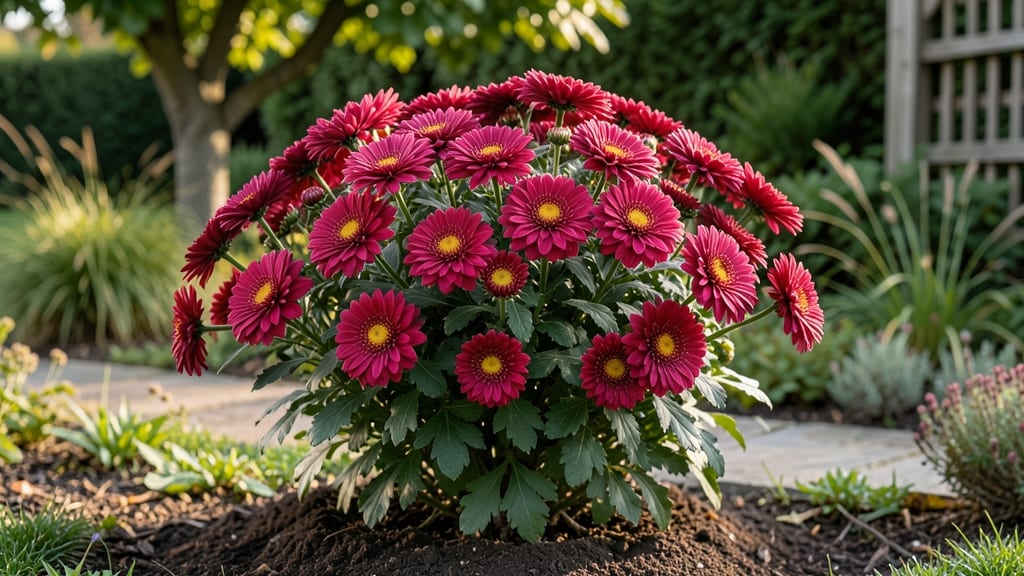
Planting garden mum perennials in early spring or late summer maximizes their cold-hardiness and ensures vibrant, year-round blooms when combined with winter mulching and well-draining soil. Varieties like 'Autumn Joy' deliver extended seasonal color, while deadheading spent blooms promotes continuous reblooming.
These hardy perennials are a gardener's secret weapon for seasonal interest, thanks to their ability to thrive in USDA zones 4-9 with minimal fuss. 🌸 The key to their success lies in timing—spring planting gives roots time to establish before summer heat, while late summer planting allows them to settle before winter.
I’ve found that adding 3-4 inches of organic mulch in fall protects roots from freeze-thaw cycles, which is crucial for varieties like 'Purple Dome' that bloom well into winter. The well-drained soil requirement can’t be overstated—waterlogged roots lead to rot, so amending clay soil with compost is often necessary.
What sets garden mums apart is their adaptability. Unlike annual mums, perennials return year after year, rewarding patience with 3-4 month bloom cycles when properly cared for.
The deadheading tip isn’t just about aesthetics—removing spent blooms redirects the plant’s energy toward new growth, which is why I make it a weekly habit during peak bloom season. For maximum impact, pair these perennials with spring bulbs like daffodils to create a 12-month color show.
💡 In This Article
- Best Garden Mum Perennial Varieties for Year-Round Color
- Step-by-Step Guide to Planting and Overwintering Garden Mums
Best garden mum perennial varieties for year-round color
The secret to garden mum perennials blooming reliably lies in their genetic hardiness and growth habits. Varieties like 'Autumn Joy' (Chrysanthemum 'Autumn Joy') stand out because they're bred to withstand USDA zones 5-9, making them ideal for northern gardens where winters drop below 20°F.
Their deep bronze-purple blooms appear in late summer and persist through frost, thanks to a natural growth cycle that delays senescence until temperatures stabilize.
The key difference between perennials and annuals is their root system—perennials develop a deep, fibrous network that stores energy for reblooming, while annuals focus all resources on one flowering cycle.
For cooler climates, 'Purple Dome' is a top choice because it blooms 2-3 weeks earlier than 'Autumn Joy' and handles 10°F temperatures without damage. Its compact, mounded shape (about 18-24 inches tall) makes it perfect for borders, while its dense foliage provides year-round interest even when not in bloom.
The color spectrum of garden mum perennials ranges from creamy white ('Snowcap') to deep burgundy ('Ruby Mound'), with each shade attracting different pollinators—bees favor yellows, while butterflies prefer purples.
What most gardeners don't realize is that the flower size correlates with cold tolerance: smaller blooms (1-2 inches) tend to be hardier than large daisy-type flowers.
When selecting varieties, consider your region's last frost date. In zone 6, plant 'Bonnie' series mums in early May to ensure roots establish before summer heat, while zone 8 gardeners can extend planting to late August.
The bloom duration also varies: 'Autumn Joy' provides 8-10 weeks of color, while 'Purple Dome' offers 6-8 weeks but with earlier starts. For maximum impact, combine late-blooming perennials with early spring bulbs like tulips—the tulips fade just as mums begin their show, creating seamless seasonal transitions.
The science behind their cold tolerance involves antifreeze proteins in their cells, similar to how woody perennials like hydrangeas survive winter. These proteins prevent ice crystal formation in tissues, allowing mums to remain dormant yet viable.
However, this mechanism requires proper soil moisture—dry roots become brittle and more susceptible to freeze damage. That's why I always recommend maintaining 1-2 inches of mulch throughout winter, even in mild climates, to regulate soil temperature fluctuations.
For container gardening, 'Little Princess' series (12-15 inches tall) thrives in 5-gallon pots with well-draining potting mix amended with perlite. Their compact size makes them ideal for patios, where they can be moved to protect from late spring frosts.
The trade-off is slightly shorter bloom times (5-6 weeks), but their portability offers flexibility for microclimates. What's fascinating is how their flower scent intensifies in cooler evenings—a trait bred into many perennial varieties to attract night-flying moths.
To maximize reblooming potential, choose florist's mum hybrids like 'Bright's Series', which were developed to produce multiple flushes of blooms when deadheaded consistently. These varieties often have double blooms (more than 20 petals), creating a lush, almost velvety appearance that annuals can't match.
The downside? They require more frequent watering (1-1.5 inches per week) during bloom season to support their heavier flower heads.
Pro tip: When selecting nursery plants, look for healthy root systems with 3-4 sturdy stems—these establish faster and produce more blooms in their first season. Avoid plants with yellowing leaves or powdery mildew, as these signs indicate poor health that will affect winter survival. 🌿