
Trees
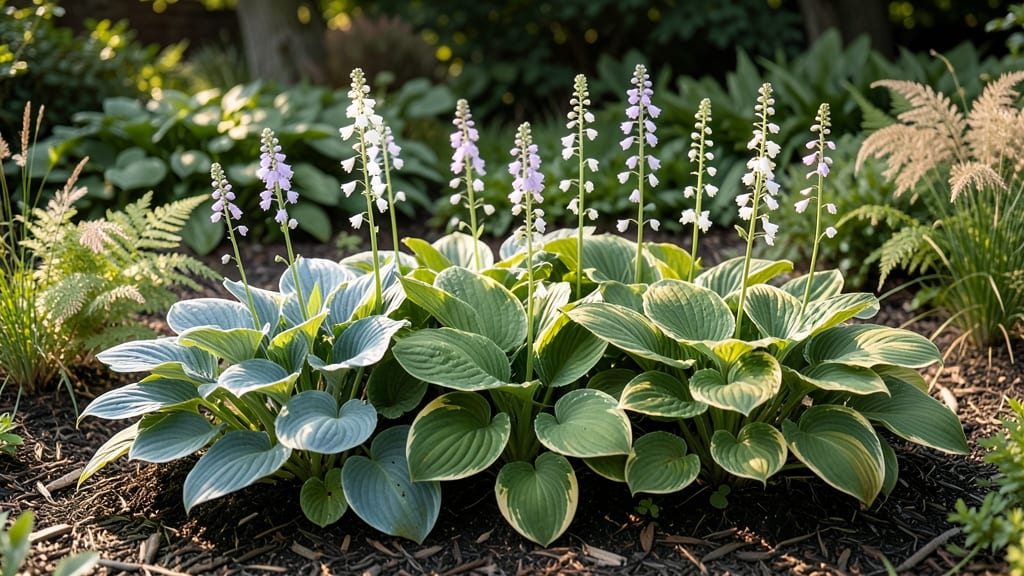
Hosta gardens pictures reveal stunning combinations of shade-loving perennials that create rich, textured landscapes year-round. These designs blend hostas with ferns, ornamental grasses, and flowering plants to maximize visual interest while maintaining low-maintenance appeal.
Hosta gardens thrive on their ability to transform shady spaces into vibrant focal points.
The key lies in their foliage diversity—mixing giant blue hostas with delicate miniatures creates dramatic height variation, while contrasting leaf colors (deep purples, chartreuse, and variegated patterns) add depth. 🌿 I've seen the best designs incorporate evergreen ferns and Japanese maples to provide winter structure, ensuring the garden remains striking even when hostas go dormant.
Lighting plays a crucial role too: uplighting accentuates textures at night, while mulching preserves moisture and protects roots during temperature swings.
What makes these gardens particularly effective is their adaptability. You'll find equally impressive layouts in both rustic woodland settings and modern minimalist designs—it's all about the plant selection and strategic placement.
The most successful combinations I've observed pair hostas with astilbes for summer blooms, heucheras for year-round color, and sedges for fine-textured contrast. Each pairing serves a purpose beyond aesthetics: some improve drainage, others attract pollinators, and many extend the growing season.
💡 In This Article
- Design Principles for Stunning Hosta Garden Layouts
- Top Plant Pairings for Hosta Gardens with Inspiring Photos
Design principles for stunning hosta garden layouts
Hosta gardens create visual drama through strategic layering by size—starting with tall varieties (3-4 feet) like 'Blue Angel' or 'Halcyon' at the back, then mid-height (18-24 inches) types like 'Francee' in the middle, and finally low-growing (6-12 inches) cultivars like 'Pandora' in front.
This creates a natural waterfall effect that draws the eye through the space. 🌿 The color wheel plays a crucial role too: pairing deep purple hostas with chartreuse varieties creates maximum contrast, while monochromatic schemes using different shades of blue or green offer subtle sophistication.
Texture contrast is equally important—combining hostas with broad-leafed ferns (like Matteuccia struthiopteris) adds delicate fronds that soften the bold hosta foliage, while spiky ornamental grasses (such as Carex oshimensis) provide vertical interest.
The secret lies in spacing: maintain 18-24 inches between hosta crowns for mature plants, but reduce this to 12-15 inches for smaller varieties to create a dense, lush look.
Lighting transforms these gardens after dark—uplighting at 2-3 feet from the base highlights textures, while pathway lighting guides visitors through the space.
Seasonal interest requires thoughtful planning. While hostas provide summer and fall color, you'll need evergreen companions like Hellebore or Japanese maples to maintain winter structure. I've observed that the most successful designs incorporate spring bloomers (like Bleeding Heart) and late-season astilbes to extend the visual season.
Mulching with 3-4 inches of shredded bark preserves moisture while suppressing weeds—critical in shady conditions where grass struggles to grow.
The focal point technique works wonders in hosta gardens. Place a specimen hosta (like the giant Hosta 'Sum and Substance') at the center of a circular bed or where it receives reflected light from nearby trees.
Surround it with contrasting textures—perhaps Heuchera for its velvety leaves or Sedum for its succulent form—to make it pop. In contemporary settings, I've seen designers use clean lines with gravel paths to create geometric contrast against the organic hosta forms, while woodland gardens embrace naturalistic drifts with irregular shapes.
Color theory becomes practical when you consider how hosta leaves reflect light differently. Blue hostas appear darker in full shade but brighten dramatically when given 2-3 hours of morning sun, while yellow or gold varieties actually thrive in brighter shade conditions.
This is why I recommend grouping plants by their light requirements—place all blue hostas together in the shadiest spot and golden varieties where they'll receive filtered light. The result is a harmonious color palette that appears intentional rather than random.
Don't overlook the power of repetition in hosta gardens. Planting 3-5 of the same variety in odd-numbered groupings creates visual rhythm, while mixing heights and textures within each grouping adds complexity.
For example, a cluster of 'June' hostas (24 inches tall) surrounded by dwarf ferns (12 inches) and low-growing ajuga (6 inches) creates a dynamic yet balanced look. This principle works equally well in both formal and informal garden styles.
The most successful hosta gardens I've seen treat the space as a living tapestry—each plant playing its part in the overall design. The key is to start with your largest hostas as the foundation, then build outwards with complementary plants that enhance rather than compete with their natural beauty.
With this approach, you'll create a garden that's not just visually stunning, but also thrives with minimal maintenance. 💫