
Light Requirements
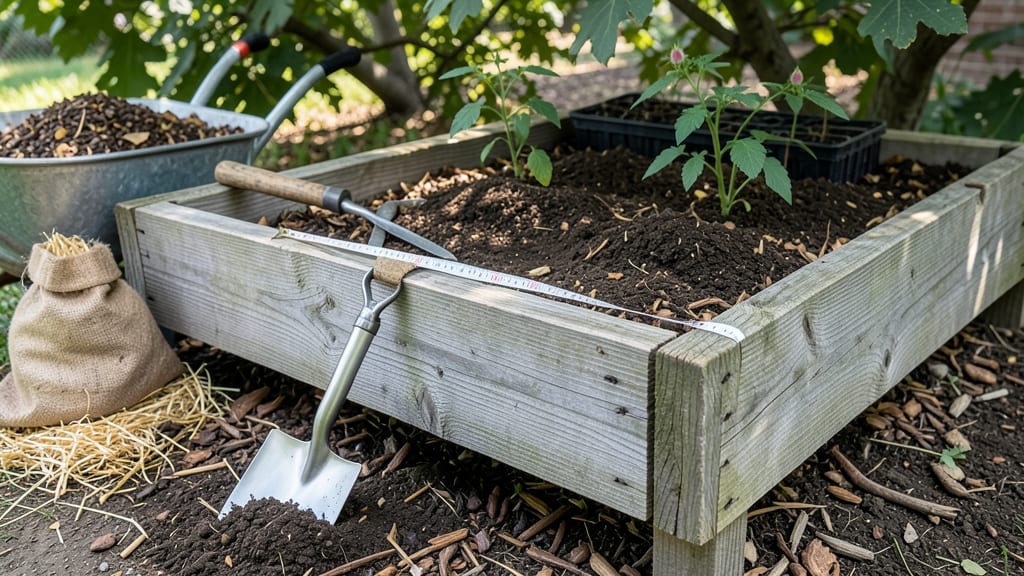
To determine how much soil you need for a raised garden bed, multiply its length, width, and depth (in feet), then convert cubic feet to cubic yards (1 cubic yard = 27 cubic feet). For example, a 4’x8’ bed filled 12” deep requires 3.5 cubic yards of soil.
Figuring out soil volume starts with measuring your bed's dimensions in feet—this is critical because even a small difference in depth can change your total soil needs significantly. 🌱 For instance, a 4'x8' bed that's 12" deep (1 foot) needs 3.5 cubic yards, but if you increase the depth to 18" (1.5 feet), you'll need 5.25 cubic yards.
Most gardeners aim for 6-12 inches of soil depth to accommodate root growth while allowing space for drainage layers like landscape fabric or gravel beneath the soil.
Another key factor is whether you're using bulk soil or pre-mixed bags. Bulk soil is typically sold by cubic yards, while bagged mixes are measured in cubic feet—this can make a big difference in your budget and planning.
I always recommend adding 10% extra to your total to account for settling and uneven bed shapes, especially if you're planting heavy root vegetables like carrots or potatoes.
💡 In This Article
- Raised Garden Bed Soil Volume Formula Explained
- Best Soil Types and Mixes for Raised Garden Beds
Raised garden bed soil volume formula explained
The core calculation for soil volume is simple geometry: multiply length × width × depth. But here's what's actually happening—you're measuring the space your plants' roots will occupy. For example, a 4'x8'x12" bed converts to 4 × 8 × 1 = 32 cubic feet of space.
Divide by 27 (since 1 cubic yard = 27 cubic feet) to get 1.18 cubic yards—but wait, that's just the empty space! 🌱
Depth matters more than most people realize. A 6-inch soil layer works for shallow-rooted plants like lettuce, but tomatoes and potatoes need 12-18 inches to thrive. The deeper you go, the more soil you need—doubling depth from 12" to 24" quadruples your soil volume.
Pro tip: Measure depth from the bottom of your bed to the top of your soil, not just the height of the frame. If you have 4 inches of gravel for drainage, subtract that from your total depth.
Existing ground level affects calculations too. If your bed sits on a slope or uneven terrain, you'll need extra soil to level it properly. A 10% buffer is wise—what seems like a flat 4'x8' area might require 5-10 cubic feet extra to compensate for dips.
For precise measurements, use a tape measure at multiple points along the length and width, then average the results before calculating volume.
Let's talk about drainage layers. If you're using landscape fabric or gravel beneath your soil, subtract that thickness from your total depth. For instance, a 2-inch gravel layer means you only need 10 inches of soil for a 12-inch deep bed.
This adjustment can save you 15-20% on soil costs while improving plant health through better drainage. 💧
For visual learners, imagine stacking 27 identical 12" cubes—that's exactly 1 cubic yard. Now picture your raised bed's dimensions as a single large box. The formula works because it converts your 3D space into a standard unit (cubic yards) that soil suppliers use.
This is why 4'x8'x12" beds always need 3.5 cubic yards—it's pure math!
One common mistake is rounding up too early. Always calculate in feet first, then round to the nearest 0.25 cubic yards when ordering bulk soil. For example, 1.18 cubic yards becomes 1.25 cubic yards—this prevents shortages but avoids overbuying.
Most garden centers sell soil in 0.5-yard increments, so plan accordingly.
Finally, consider soil settling. Freshly tilled soil compresses over time, especially in clay-heavy mixes. Adding 10% extra accounts for this—what looks like 2 cubic yards might become 1.8 cubic yards after a few waterings. This buffer ensures your plants have consistent moisture and nutrients throughout the growing season. 🌿