
Advice
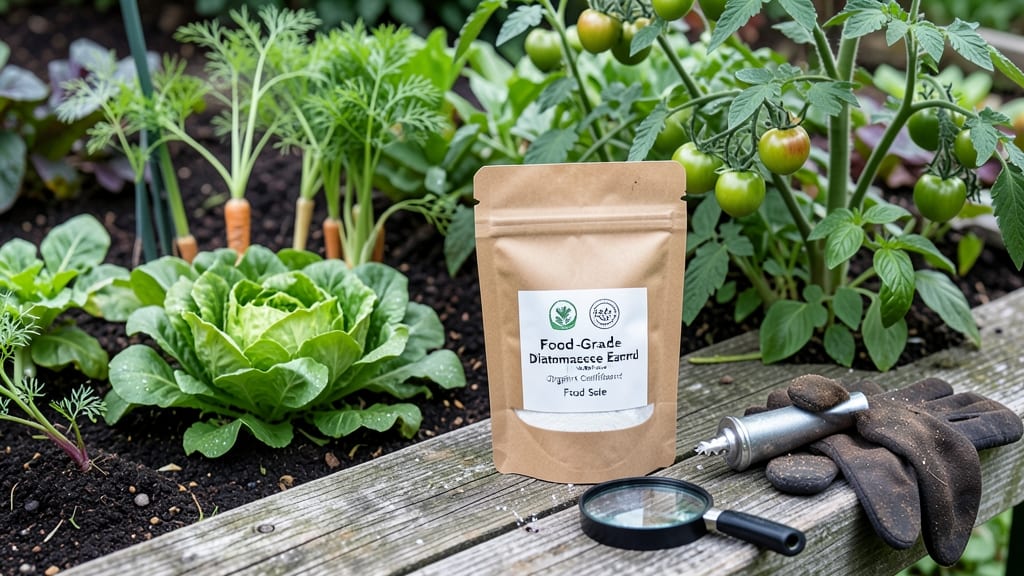
Diatomaceous earth is safe for vegetable gardens when used carefully as a natural pesticide, but it can harm beneficial insects like bees and earthworms. Always use food-grade DE sparingly and avoid direct contact with edible plants or soil organisms.
Diatomaceous earth (DE) works by creating microscopic abrasions in soft-bodied pests like aphids and slugs, dehydrating them without chemicals. 🔥 However, its fine particles can linger in soil and harm earthworms—those tiny ecosystem engineers that improve drainage and nutrient cycling.
I recommend applying DE only in targeted spots (like along garden edges) and reapplying after rain, since water washes it away. For edible crops, timing matters: apply in the evening when pollinators are less active.
If you're hesitant about using DE, there are plenty of effective alternatives. Neem oil, for example, disrupts insect life cycles without harming beneficial insects, while companion planting (like marigolds repelling nematodes) creates natural pest barriers.
Biological controls such as ladybugs or nematodes target specific pests without affecting your garden's broader ecosystem. Each method has trade-offs—neem oil requires reapplication, while companion planting takes time to establish—but they're all safer for long-term soil health.
💡 In This Article
- How Diatomaceous Earth Works in Organic Pest Control
- Safer Alternatives for Organic Vegetable Garden Pest Management
How diatomaceous earth works in organic pest control
Diatomaceous earth (DE) functions as a physical pesticide through its microscopic structure. When applied as a fine powder, the particles—ranging from 3 to 20 microns—create razor-sharp edges that damage the exoskeletons of soft-bodied insects like aphids, slugs, and earwigs.
These tiny cuts disrupt the pests' protective waxy layer, causing rapid dehydration and death within 24 to 72 hours. Unlike chemical pesticides, DE doesn't introduce toxins into your garden ecosystem, making it a popular choice for organic growers. 🔥
The effectiveness of DE depends on direct contact—it won’t work if pests avoid the powder or if rain washes it away. For best results, apply a thin layer (1/8 to 1/4 inch) around plants in dry conditions (humidity below 50%) and reapply after watering.
The powder also has a gritty texture that can irritate human skin and lungs, so wear a mask and gloves when handling it. Food-grade DE is safe for edible gardens, but avoid inhaling the dust.
While DE targets pests, it can harm beneficial insects like bees and earthworms due to its abrasive nature. Bees collect pollen during daylight hours, so applying DE in the evening reduces exposure risks.
Earthworms, which aerate soil and improve nutrient cycling, may be affected if DE accumulates in their burrows. To minimize harm, spot-treat only problem areas and avoid broadcasting DE over large soil surfaces. 💫
DE’s impact on soil health is another critical factor. Unlike synthetic chemicals that leave residues, DE breaks down naturally over time, typically within 1 to 3 months, depending on soil conditions. However, it doesn’t address fungal or bacterial issues—those require targeted organic solutions like copper sprays or compost teas.
For long-term garden health, DE should be part of an integrated pest management (IPM) strategy rather than a standalone solution.
Compared to chemical pesticides, DE offers a gentler approach but requires careful application. For example, while malathion kills pests instantly, it also harms beneficial insects and leaves toxic residues. DE, on the other hand, provides a slower, mechanical kill that aligns with organic principles.
The trade-off? It demands more frequent monitoring and reapplication to maintain effectiveness. For gardeners prioritizing biodiversity, DE can be a useful tool—when used thoughtfully. ✨
Pro tip: Mix DE with a light carrier like kaolin clay or flour to improve adhesion and reduce dust. This blend stays in place longer, especially on leafy greens, and cuts down on the need for frequent reapplication.
Always test a small area first to ensure your plants tolerate the treatment.