
Fertilization
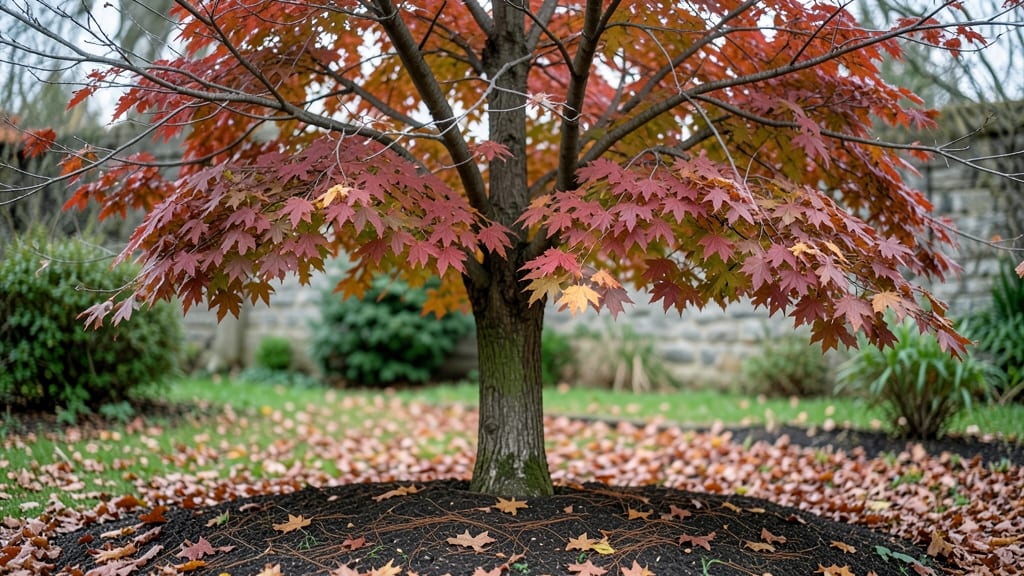
Mulched leaves in garden transform your soil by breaking down into nutrient-rich humus, smothering weeds naturally, and locking in moisture while keeping roots cool. Always use dry, disease-free leaves for the best results.
Using leaf mulch in your garden is like giving your plants a slow-release fertilizer and a protective blanket all in one. 🌿 The decomposition process feeds beneficial microbes, which in turn boost nutrient availability for your plants over time.
Unlike synthetic fertilizers that provide quick but short-lived benefits, organic leaf mulch works steadily—think of it as a long-term investment in soil health. Plus, it’s a free or low-cost way to recycle yard waste while reducing watering needs by up to 50%.
For best results, aim for a 2-4 inch layer of shredded leaves—this thickness blocks sunlight effectively while allowing water and air to penetrate. Whole leaves work too, but they decompose slower.
I’ve found that applying mulch in early spring or fall gives plants the most consistent benefits, as summer heat can accelerate decomposition too quickly. Just avoid piling leaves against plant stems to prevent rot.
💡 In This Article
- How Leaf Mulch Enhances Soil Structure and Plant Nutrition
- Best Practices for Applying Leaf Mulch in Your Garden
How leaf mulch enhances soil structure and plant nutrition
When leaves decompose, they trigger a cascade of biological activity in the soil. The process begins with decomposer organisms—like bacteria, fungi, and earthworms—that break down cellulose and lignin in the leaves.
These microbes release enzymes that convert organic matter into humus, a dark, spongy substance that improves soil structure by binding particles together. This creates larger pores that enhance aeration and water retention, similar to how adding sand to clay improves its workability.
The nutrient release happens in stages. Initially, nitrogen becomes available as microbes break down proteins in the leaves, but this can temporarily "tie up" nitrogen in the soil if applied too thickly. Over 6-12 months, the mulch releases phosphorus and potassium—key macronutrients for root development and flowering.
Unlike synthetic fertilizers that provide immediate but short-lived boosts, leaf mulch acts like a time-release capsule, feeding plants gradually. For example, a 3-inch layer of shredded leaves can supply 20-30% of a plant's annual nitrogen needs.
One often-overlooked benefit is how mulch regulates soil temperature. During summer, it acts as insulation, keeping roots 5-10°F cooler than bare soil, while in winter it provides a protective layer that prevents freeze-thaw cycles from damaging root systems.
This thermal buffering is particularly valuable for tender perennials and vegetables like tomatoes, which thrive when soil stays between 60-75°F. The mulch's ability to moderate temperature also reduces water evaporation, which is why gardens with leaf mulch often require 30-50% less irrigation.
Comparing organic leaf mulch to inorganic options like plastic or gravel reveals stark differences. Organic mulch improves soil fertility over time, while inorganic materials only suppress weeds and retain moisture without adding nutrients. However, inorganic mulch lasts longer and doesn't decompose.
For example, plastic mulch can stay effective for 1-2 seasons, whereas leaf mulch needs replenishing annually. The trade-off? Organic mulch supports a thriving soil ecosystem, while inorganic options create a sterile environment that may require additional fertilizers.
To maximize these benefits, focus on the carbon-to-nitrogen (C:N) ratio of your leaves. Most deciduous leaves have a 40:1 to 80:1 C:N ratio, which is ideal for gradual decomposition. Evergreen needles, however, have a much higher ratio (100:1) and decompose slower.
Mixing leaf mulch with nitrogen-rich materials like grass clippings or compost can speed up the process and prevent nitrogen depletion in the soil. This balance is crucial for maintaining microbial activity and nutrient availability.
The science behind leaf mulch shows why it's one of nature's most efficient soil amendments. By understanding these mechanisms—decomposition, nutrient release, temperature regulation, and microbial activity—you can make informed decisions about how to use it in your garden.
The result? Healthier plants, reduced maintenance, and a more sustainable growing environment. 🌱