
Tools
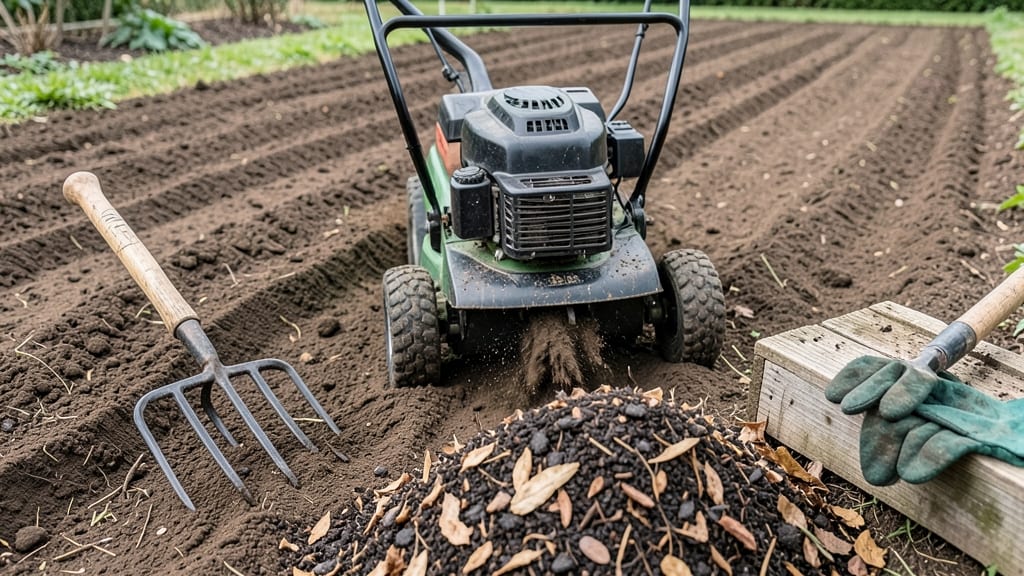
When we talk about "tilling the garden," we mean turning over and aerating the soil to break up compacted earth, clear out weeds and debris, and create an ideal planting environment. This essential soil preparation step boosts root penetration, improves water drainage, and helps seeds establish stronger growth from the start.
Tilling transforms hard, dense soil into a fluffy, nutrient-rich base that plants absolutely thrive in.
The physical disruption from tilling creates tiny air pockets that roots need to breathe, while exposing buried organic matter to decompose faster. 🌱 I've seen firsthand how freshly tilled soil warms up quicker in spring, giving early-season plants a head start.
What's fascinating is how this process also stimulates beneficial soil microbes that help break down nutrients into forms plants can actually absorb.
This isn't just about loosening dirt—it's about creating the perfect foundation. The right tilling technique can mean the difference between struggling seedlings and a lush, productive garden.
Many gardeners make the mistake of over-tilling, which can actually harm soil structure by destroying beneficial organisms and creating a powdery texture that washes away easily.
💡 In This Article
- Why Tilling Soil Improves Plant Growth
- Best Tools and Techniques for Effective Garden Tilling
Why tilling soil improves plant growth
The core benefit of tilling lies in its ability to disrupt soil compaction, which is often caused by foot traffic, heavy machinery, or natural settling over time.
Compacted soil creates a dense barrier that restricts root penetration and oxygen flow—roots struggle to expand beyond 2-3 inches depth in heavy clay, compared to 12+ inches in well-aerated loam. This oxygen deprivation forces roots to grow horizontally rather than vertically, making plants more vulnerable to drought and wind stress.
When you till, you're essentially creating thousands of microscopic air channels throughout the soil profile. These pockets allow oxygen to reach root zones where it's needed for cellular respiration—the process that powers root growth and nutrient absorption.
Studies show that properly tilled soil can increase oxygen levels by 30-50% compared to untouched compacted soil. The physical disruption also breaks apart soil aggregates, creating a crumbly texture that holds moisture while preventing waterlogging—a critical balance for seed germination.
The mechanical action of tilling exposes buried organic matter to air and moisture, kickstarting decomposition by soil microbes. These microorganisms then convert complex organic compounds into plant-available nutrients like nitrogen, phosphorus, and potassium.
What's fascinating is how this microbial activity creates a "feeding frenzy" in the soil—within 2-4 weeks of tilling, you can see a visible increase in earthworm activity and fungal networks that form the backbone of healthy soil ecosystems.
However, there's a critical trade-off: traditional tilling can disrupt these same beneficial organisms if done excessively. The no-till method has gained popularity because it preserves soil structure and microbial communities while still improving drainage through organic matter incorporation.
For example, cover crops planted in no-till systems can add 2-3 tons of organic material per acre annually without the soil disturbance that releases carbon back into the atmosphere.
Consider the difference between tilling clay-heavy soil versus sandy loam: in clay, tilling helps break the dense particles, while in sandy soil, the focus should be on adding organic amendments to prevent nutrient leaching.
The key is matching your tilling approach to your soil type—what works for one garden bed might compact another if not done carefully. 🌱
Timing matters too. Tilling in late fall or early spring—when soil temperatures are between 50-60°F—allows organic matter to decompose over winter, creating a nutrient-rich seedbed by planting time.
This seasonal strategy prevents the rapid nutrient loss that occurs when tilling in hot summer months, where decomposition happens too quickly for plants to utilize the released nutrients.
What most gardeners don't realize is that tilling also helps regulate soil temperature. Dark, freshly tilled soil absorbs 20-30% more heat than undisturbed soil, which can be crucial for early spring planting.
This warming effect creates a microclimate that encourages faster seed germination—sometimes cutting germination times by 3-5 days compared to planting in untilled beds.