
Tools
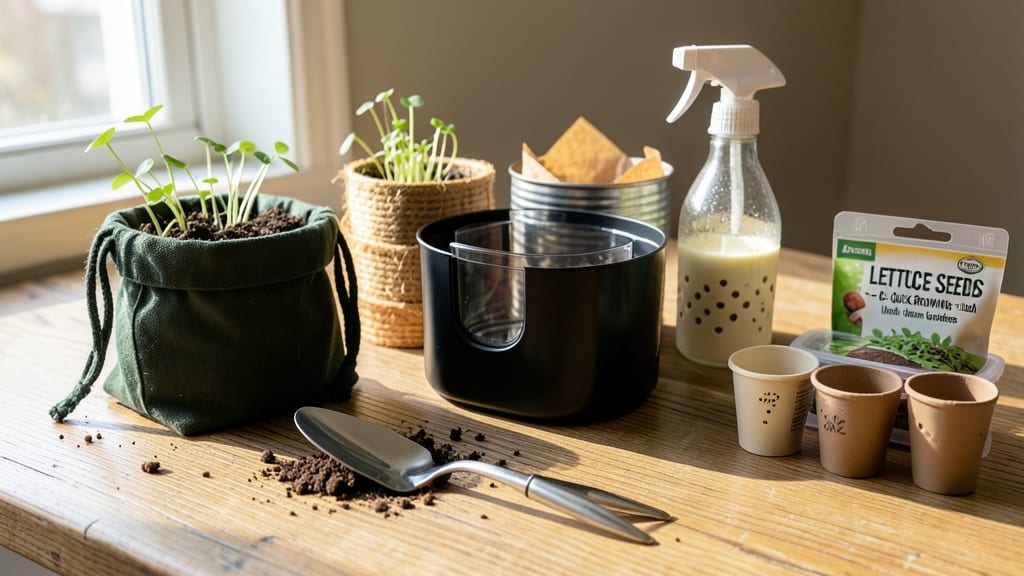
Choosing urban garden seeds means picking fast-growing, space-efficient varieties like bush beans, dwarf tomatoes, or leafy greens such as lettuce and spinach, which adapt well to containers and limited sunlight while delivering high yields in small areas.
When you're working with limited space, seed selection becomes your biggest advantage.
Urban garden seeds should prioritize maturity time—look for varieties that reach harvest in 30-60 days—so you can enjoy multiple crops throughout the season. 🌱 Compact plants like cherry tomatoes or bush peas grow just 2-3 feet tall, making them perfect for balconies or windowsill planters.
The key is balancing growth speed with space efficiency; for example, radishes sprout in under 3 weeks but need minimal room, while dwarf eggplants take longer but produce abundantly in containers.
Don't overlook light requirements either—most urban gardens get partial sun. Choose seeds labeled as partial shade tolerant, like swiss chard or kale, which thrive with just 4-6 hours of sunlight daily.
I've found that vertical gardening with trellises for vining plants (like bush cucumbers) can double your yield without expanding your footprint. The right seed choices turn even the smallest patio into a productive growing space.
💡 In This Article
- Key Traits of Fast-Growing Urban Garden Seeds
- Top Compact Seed Varieties for Balconies and Containers
Key traits of fast-growing urban garden seeds
Fast-growing seeds are the backbone of urban gardening because they deliver quick rewards in limited spaces. The most critical trait is days to maturity, which determines how soon you'll harvest. For example, radishes mature in just 25-30 days, while arugula reaches harvest in 30-40 days.
These speedy growers let you enjoy fresh produce even in small containers, reducing the wait time that often frustrates new gardeners. 🌱 The science behind this speed lies in their shallow root systems and rapid cell division during germination, which prioritizes leafy growth over structural development.
Plant height is another game-changer for urban spaces. Compact varieties like bush beans (growing just 18-24 inches tall) or dwarf cherry tomatoes (reaching 3-4 feet) fit perfectly in 5-gallon containers or hanging baskets.
Compare this to their full-sized counterparts—like pole beans that climb 6-10 feet—which require trellises and more space. The key is selecting seeds labeled "bush," "dwarf," or "compact," as these have been bred specifically for space efficiency.
This genetic modification affects their growth hormones, limiting vertical expansion while maintaining robust yield potential.
Sunlight exposure directly impacts which seeds thrive in urban environments. Most urban gardens receive partial sun (4-6 hours daily), so choose seeds tolerant of these conditions. Leafy greens like spinach and kale excel here, as they prioritize leaf production over flowering.
Their broad leaves capture scattered sunlight efficiently through a process called photosynthetic flexibility, where they adjust chlorophyll production based on light intensity. In contrast, sun-loving plants like zucchini need 6-8 hours of full sun and become stressed in partial shade, leading to stunted growth and poor yields.
One often-overlooked factor is seed density, which affects how many plants you can fit in a container. For instance, lettuce seeds are tiny and can be sown 1/4 inch apart in rows, allowing 16-25 plants per square foot. This high density maximizes yield in small areas.
Meanwhile, larger seeds like bean seeds need 3-4 inches between plants, reducing your container capacity. Understanding these spacing requirements helps you plan your layout before planting, preventing overcrowding that leads to competition for nutrients and light.
Temperature sensitivity also plays a role in urban gardening success. Cool-season crops like arugula and radishes thrive in 50-65°F conditions, making them ideal for spring or fall planting in many urban climates. Their rapid growth cycle means they can complete their life cycle before summer heat arrives.
In contrast, warm-season crops like basil need 70-80°F to germinate and grow, which may require starting seeds indoors or using heated seedling mats in cooler urban environments. This temperature adaptation affects enzyme activity in the seeds, controlling how quickly they metabolize stored nutrients during germination.
Consider the harvest window—the period between when a plant is mature and when it bolts (goes to seed). Fast-growing greens like baby spinach can be harvested in 30-40 days but may bolt in 45-50 days, giving you just a 10-day harvest window before the leaves turn bitter.
Succession planting—sowing new seeds every 2-3 weeks—ensures a continuous supply. This strategy works because urban gardeners often lack the space to grow large batches all at once, so staggered planting maximizes your yield per square foot throughout the season. 🌿