
Container Gardens
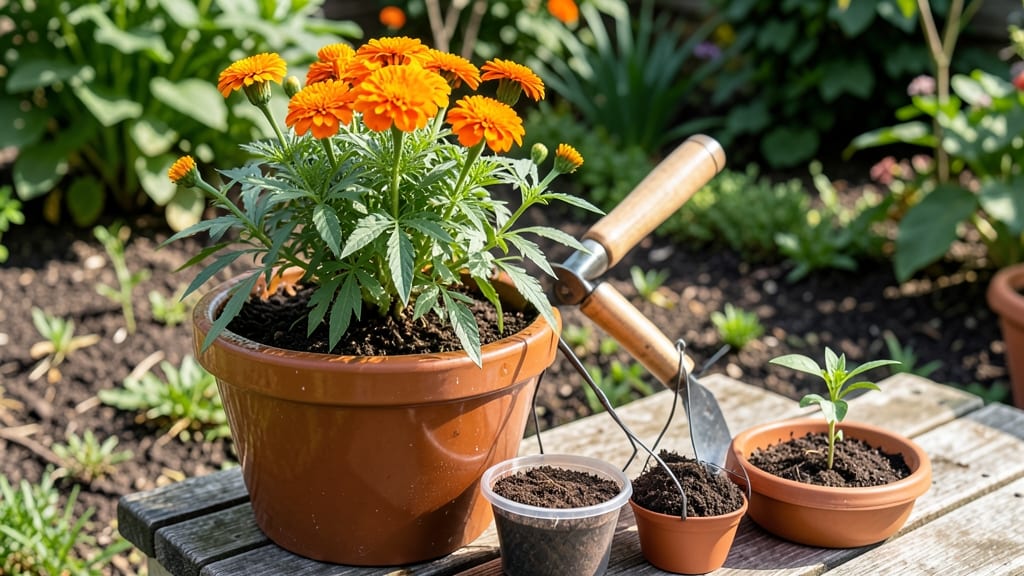
Using garden soil in containers requires balancing nutrients, drainage, and disease prevention—mix it with compost and perlite (1:1 ratio) to improve aeration, but avoid heavy clay soil that compacts easily. Sterilize soil first to kill pathogens and ensure pots have drainage holes.
Garden soil straight from your yard can actually harm container plants if used alone, because it compacts too easily and lacks the air pockets roots need. 🌱 The key is amending it with organic matter like compost (20-30%) and coarse materials such as perlite or vermiculite (30%) to create a looser, breathable medium.
I always recommend testing your soil first—if it feels dense when dry or clumps when wet, it needs more structural amendments. Sterilizing with heat or hydrogen peroxide also prevents fungal issues that thrive in untreated garden soil.
For best results, tailor your mix to the plant: herbs like basil thrive in slightly drier blends, while tomatoes need more moisture-retentive mixes with added worm castings. 🌿 If you're unsure, start with a 50/50 garden soil to potting mix base—this gives you the benefits of natural nutrients while avoiding compaction.
Remember, containers dry out faster than ground beds, so always check moisture levels before watering.
💡 In This Article
- Why Garden Soil Needs Modification for Containers
- Best Soil Mixes for Container Gardening with Garden Soil
Why garden soil needs modification for containers
Garden soil from your yard is designed for in-ground planting, where roots can spread freely and natural soil layers provide balance. In containers, however, the confined space creates a completely different environment.
The primary issue is compaction: garden soil, especially clay-heavy types, becomes dense when watered, suffocating roots by reducing oxygen levels. This happens because container soil lacks the natural layering of topsoil, subsoil, and organic matter found in garden beds.
Without modification, roots struggle to access both water and air, leading to stunted growth or even root rot.
Another critical factor is nutrient availability. Garden soil often contains uneven nutrients—some areas may be rich in nitrogen from decomposed leaves, while others lack phosphorus or potassium. Container plants, however, have limited access to these resources since they can't spread their roots widely.
Adding compost (20-30%) introduces steady organic matter that slowly releases nutrients as microbes break it down. For example, a mix with 50% garden soil, 30% compost, and 20% perlite creates a balanced medium where roots get both structure and nourishment.
Sterilization is often overlooked but essential for container soil. Untreated garden soil may harbor pathogens like Pythium or weed seeds that thrive in the warm, moist conditions of pots.
Sterilizing with hydrogen peroxide (3% solution, 1 cup per gallon of soil) or baking at 180°F (82°C) for 30 minutes kills these without harming plants. I’ve seen fungal infections wipe out entire container gardens within weeks—sterilization is a simple step that prevents costly failures. 🌱
Moisture retention is another challenge. Garden soil holds water tightly, leading to overwatering risks in containers where excess water drains quickly. Adding coarse amendments like perlite or vermiculite (20-30%) creates air pockets that improve drainage while allowing roots to access moisture efficiently.
For instance, a tomato plant in unmodified garden soil may develop blossom-end rot from inconsistent moisture, whereas the same plant in a well-amended mix thrives with steady hydration.
Finally, consider the texture contrast. Garden soil particles are typically fine and uniform, while container mixes need a mix of sand, silt, and organic matter for optimal structure. Think of it like baking: flour alone makes a dense cake, but adding eggs and butter creates a lighter texture.
Similarly, blending garden soil with coco coir or worm castings improves water-holding capacity while maintaining aeration—critical for root health in confined spaces.
For visual learners, imagine this: unmodified garden soil in a pot is like a sponge with no holes—water and air can’t move freely. Amended soil, however, resembles a Swiss cheese: plenty of openings for roots to breathe and expand. This structural difference directly impacts plant vigor and yield. 💫