
Tools
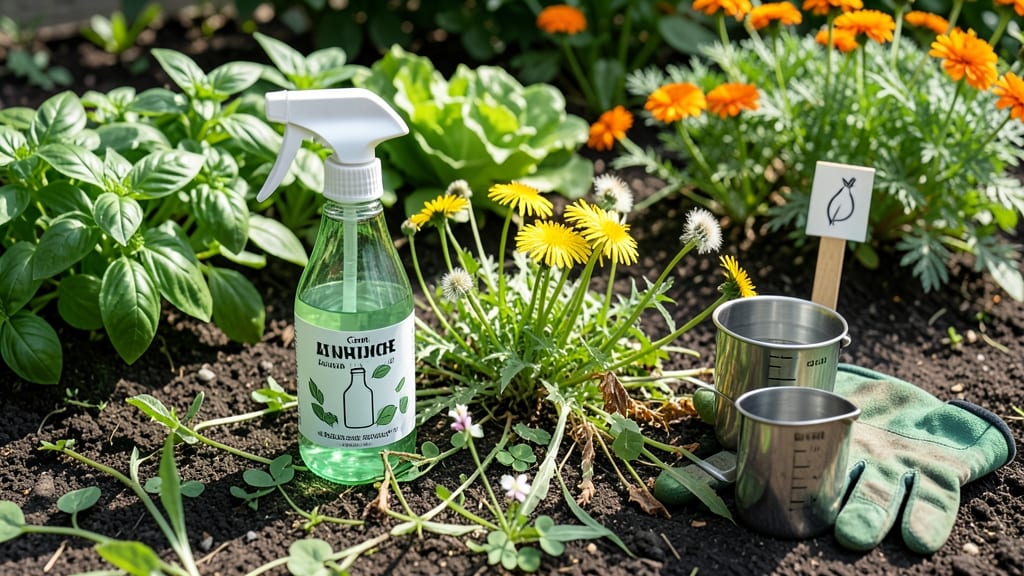
Vinegar as a weed killer in the garden works by breaking down plant cell membranes with its acetic acid content, effectively killing weeds on contact. Opt for 20%+ vinegar, apply on sunny days, and avoid spraying desirable plants or soil near roots.
The acetic acid in vinegar acts like a natural herbicide by dehydrating weed cells, which is why higher concentrations (like 20%+) deliver faster results. 🌱 I’ve found that applying it on warm, sunny days maximizes effectiveness because the sun helps the vinegar penetrate deeper into the weeds.
For tougher weeds, mixing in a teaspoon of dish soap as a surfactant can improve adhesion, though this may also harm nearby plants. Always test a small area first to check for unintended damage.
Timing matters too—spray weeds when they’re actively growing, and reapply if rain washes it away. While vinegar is eco-friendly, it won’t prevent future weeds, so combine it with mulching or regular garden maintenance for long-term control.
💡 In This Article
- How Vinegar Kills Weeds: The Science Behind Acetic Acid
- Best Vinegar Weed Killer Techniques for Garden Success
How vinegar kills weeds: the science behind acetic acid
The acetic acid in vinegar acts as a natural herbicide by disrupting the cell membranes of weeds at a cellular level. When applied, the acid penetrates the plant's cuticle, causing the membranes to break down and lose their integrity.
This process leads to rapid dehydration and death within 24-48 hours for most weeds. The higher the acetic acid concentration, the more effective the kill—5% vinegar (household white vinegar) works but slowly, while 20%+ vinegar delivers near-instant results on contact.
Temperature and sunlight amplify vinegar's effectiveness. On sunny days, the sun's heat helps the vinegar evaporate faster, allowing the acetic acid to penetrate deeper into the plant's vascular system. In cooler conditions, the process slows down, requiring multiple applications.
For example, dandelions—with their deep root systems—may need 3-4 applications spaced 3-4 days apart when using 10% vinegar, while broadleaf weeds like chickweed often die after a single treatment with 20% vinegar on a warm afternoon.
Acetic acid's mechanism is similar to how salt kills plants by osmosis, but vinegar works faster and without leaving harmful residues in the soil. The key difference is that vinegar's acidity denatures proteins in the plant cells, causing irreversible damage.
This is why it's crucial to avoid spraying desirable plants—vinegar doesn't discriminate between weeds and your prized tomatoes or flowers.
The pH of vinegar (around 2.0-3.0) is far more acidic than the ideal soil pH (6.0-7.0), which is why it's also important to avoid spraying soil near plant roots.
For tough weeds like bindweed or creeping Charlie, you might consider adding a 1 teaspoon of dish soap per gallon of vinegar. The soap acts as a surfactant, helping the vinegar cling to the leaves and stems longer.
However, this mixture can also harm nearby plants, so use it sparingly and with caution. Always conduct a patch test in an inconspicuous area first to gauge the reaction of your garden soil and plants.
One common misconception is that vinegar will prevent future weed growth. While it kills existing weeds effectively, it doesn’t act as a preventive measure. Weeds will return unless you combine vinegar treatments with other methods like mulching, hand-pulling, or planting ground covers.
Think of vinegar as a spot-treatment tool rather than a long-term solution.
If you're using vinegar in your garden, consider investing in a pump sprayer for even coverage. These tools allow you to apply vinegar consistently without the mess of hand-held spray bottles. Just remember to wear gloves and protective eyewear—vinegar can cause skin irritation and eye burns if it splashes.
The smell of vinegar is also pungent, so applying it on a breezy day can help disperse the odor quickly.