
Companion Plants
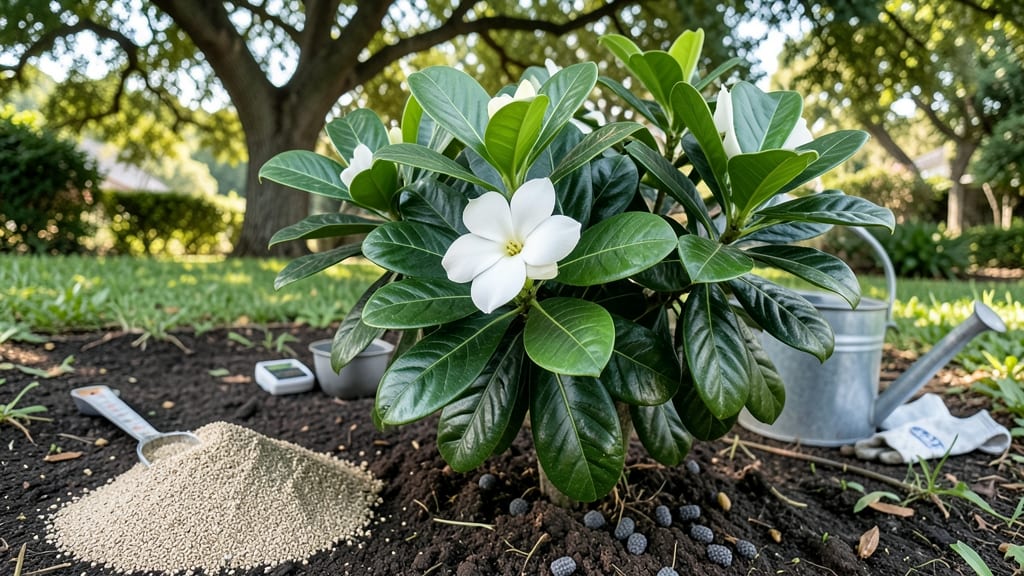
To feed gardenias properly, provide acidic soil (pH 5.0–6.0), use balanced fertilizer (10-10-10 or 12-4-8), and incorporate organic matter like compost. Avoid high-nitrogen fertilizers or alkaline soil, which stunt growth and cause leaf drop.
Gardenias thrive when their soil mimics their natural tropical habitat, where the slightly acidic environment helps them absorb essential nutrients like iron and magnesium. 🌿 The pH range isn't just a number—it's the difference between vibrant blooms and yellowing leaves (a classic sign of iron deficiency).
I've found that mixing in pine bark fines or peat moss can help maintain that perfect acidity level without overcomplicating things.
When it comes to fertilizers, timing matters just as much as the blend. Spring and fall are the ideal windows—this aligns with the plant's natural growth cycles.
For organic options, I swear by fish emulsion in spring for a phosphorus boost (which encourages blooming) and bone meal in fall to replenish phosphorus and calcium. The key is moderation: gardenias are sensitive to salt buildup from fertilizers, so always water thoroughly after application.
💡 In This Article
- Optimal Soil pH and Nutrient Requirements for Gardenias
- Best Fertilizers and Feeding Schedule for Thriving Gardenias
Optimal soil pH and nutrient requirements for gardenias
Gardenias evolved in acidic, nutrient-rich tropical soils where the pH typically ranges between 5.0 and 6.0. This acidity isn't just a preference—it's essential for iron uptake.
When soil becomes alkaline (above 7.0), iron forms insoluble compounds that the plant can't absorb, leading to chlorosis (yellowing leaves with green veins). 🌿 The same goes for manganese and zinc, which also become unavailable at higher pH levels.
Think of it like a lock-and-key mechanism: only the right pH allows these micronutrients to "unlock" and enter the plant's system.
The soil's acidity also affects how gardenias process nitrogen. In acidic conditions, nitrogen exists primarily as ammonium (NH₄⁺), which gardenias absorb more efficiently than nitrate (NO₃⁻)—the dominant form in alkaline soils.
This is why gardenias often show signs of nitrogen deficiency (pale leaves, stunted growth) even when the soil tests high in nitrogen. 💫 The solution lies in soil amendments: mix in 2-3 inches of pine bark fines or 1-2 inches of peat moss into the top 6 inches of soil annually.
These materials slowly release organic acids that lower pH while adding beneficial microbial activity.
Beyond pH, gardenias need a steady supply of magnesium, calcium, and potassium to support their heavy blooms. Magnesium, for instance, is crucial for chlorophyll production—without it, leaves develop brown patches between veins.
A simple way to monitor this is by checking leaf color: if new growth appears pale or mottled, it's often a magnesium deficiency. 🌱 Organic sources like Epsom salt (magnesium sulfate) applied at 1 tablespoon per gallon of water every 4-6 weeks can work wonders.
The key is consistency: gardenias are slow growers, so they rely on gradual nutrient release rather than quick fixes.
What most gardeners overlook is the role of organic matter in nutrient availability. Compost or well-rotted leaf mold doesn't just feed the plant—it improves soil structure, helping roots access water and nutrients more efficiently.
When I first started growing gardenias, I made the mistake of using fresh manure, which raised the pH and burned the roots. 🔥 The lesson? Always use fully decomposed organic matter (compost aged 6-12 months) and test your soil every 2-3 years to catch pH shifts early.
A simple soil test kit (available for $10-$20) can save you from costly mistakes.
For container-grown gardenias, the challenge is even greater because potting mixes often lack the acidity and micronutrients of garden soil. I recommend repotting every 2-3 years using a mix of 50% acidic potting soil, 30% pine bark, and 20% perlite.
This blend maintains moisture while preventing compaction. Add a handful of sulfur granules (available at garden centers) to the mix to keep pH in check—just 1-2 teaspoons per gallon of soil is enough to lower pH by 0.5-1.0 points over time.
One final tip: gardenias are heavy feeders during their spring bloom phase (March-May). This is when they need the most phosphorus and potassium. A slow-release fertilizer like Osmoote 14-14-14 (applied at 1/2 teaspoon per square foot) works well, but always water it in thoroughly to prevent salt buildup.
The goal is to mimic their natural environment—where nutrients are available in small, steady doses rather than sudden spikes. 🌸