
Blooming
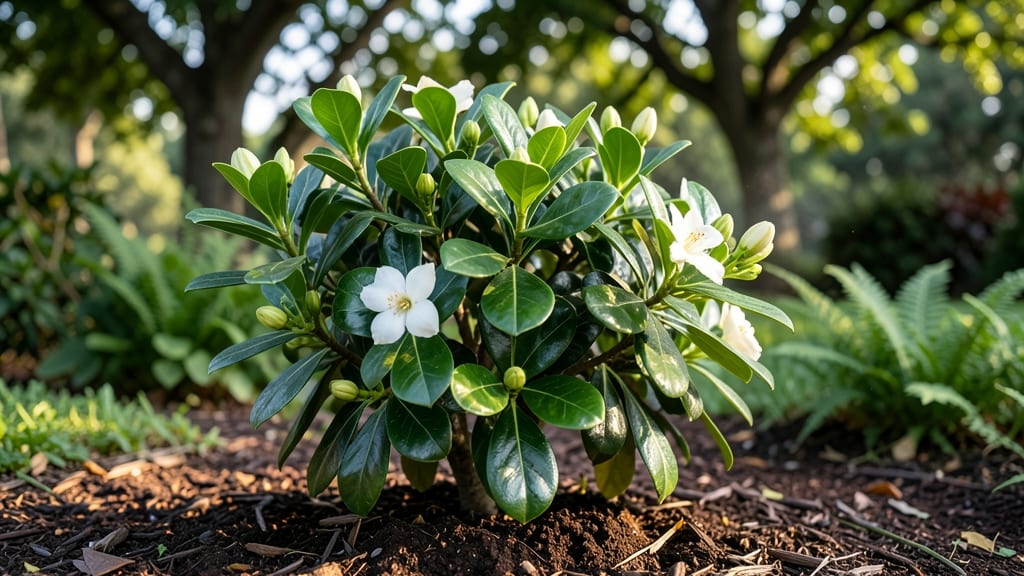
Gardenias bloom in late spring to early summer, typically between May and July, though timing varies by variety and climate. Proper sunlight, humidity, and pruning encourage longer, fragrant flowering seasons.
Gardenias are famous for their intoxicating fragrance, and their bloom schedule is closely tied to environmental cues. 🌸 Most varieties—especially the classic G. jasminoides—follow the late spring to early summer window because they need warm temperatures and longer daylight hours to trigger flowering.
Tropical gardenias like G. augusta may bloom year-round in warm climates, while temperate varieties often wait until after the last frost to avoid damage. I’ve seen gardenias in my garden push their blooming season earlier if they receive consistent afternoon sun and well-draining, acidic soil.
What’s fascinating is how gardenias "communicate" with their environment. 🌿 They respond to changes in humidity and temperature by producing more flowers when conditions are ideal. For example, a sudden drop in nighttime temperatures can actually stimulate bud formation, while drought stress will delay blooms.
This is why gardeners often prune in late winter—it encourages fresh growth that translates to more abundant flowers once the weather warms.
💡 In This Article
- Climate and Variety Factors Affecting Gardenia Bloom Times
- Tips to Extend Gardenia Flowering Season
Climate and variety factors affecting gardenia bloom times
Gardenias are tropical and subtropical plants at heart, which means their blooming cycles are deeply influenced by temperature and humidity patterns. 🌞 The ideal range for flowering is 65-85°F during the day, with nighttime temperatures staying above 55°F.
When temperatures dip below 50°F, buds often fail to open, and prolonged cold snaps can kill the plant entirely. This is why gardenias in colder climates (USDA zones 8-10) typically bloom later, waiting until after the last frost in late spring when soil temperatures consistently reach 60°F.
The two most common gardenia varieties—G. jasminoides (the fragrant classic) and G. augusta (larger, showier blooms)—have distinct timing preferences. G. jasminoides thrives in temperate climates and usually blooms from May to July, while G. augusta, which originates from tropical regions, may produce flowers year-round in warm zones but often synchronizes with summer rains in cooler areas.
Daylight hours also play a role: gardenias need 12-14 hours of light daily to trigger flowering, which is why they bloom more prolifically in summer when days are longest.
Humidity acts as another critical trigger. Gardenias require 50-70% relative humidity to open buds properly—below 40% humidity, flowers may drop before fully blooming. 💦 In arid climates, gardeners often use misting systems or group plants together to create microclimates with higher moisture levels.
The plant’s natural habitat in Southeast Asia and Australia explains this need: these regions have consistently high humidity, and gardenias have evolved to depend on it for optimal flowering.
Soil acidity (pH 5.0-6.5) further influences bloom timing. Gardenias absorb nutrients more efficiently in acidic conditions, which supports robust growth and flower production. If your soil is alkaline, the plant may struggle to bloom at all—this is a common issue in regions with limestone-based soils.
The plant’s roots also need excellent drainage; waterlogged conditions can delay flowering by up to 4-6 weeks as the plant diverts energy to survival rather than reproduction.
One fascinating adaptation is how gardenias respond to seasonal rainfall patterns.
In their native tropical environments, gardenias often bloom in response to the monsoon season, when humidity spikes and soil moisture increases. 🌧️ This explains why gardenias in Mediterranean climates (like California) may bloom in late summer or early fall, aligning with the region’s natural wet season.
Understanding these patterns helps gardeners replicate ideal conditions, whether through irrigation schedules or humidity tents during dry spells.
Finally, wind exposure can shift bloom timing. Gardenias in sheltered locations (like patios or courtyards) often bloom 2-3 weeks earlier than those in exposed garden beds, as they experience less temperature fluctuation.
This is why many gardeners plant gardenias near walls or fences—creating a windbreak that mimics the stable microclimates of their tropical origins.