
Planting
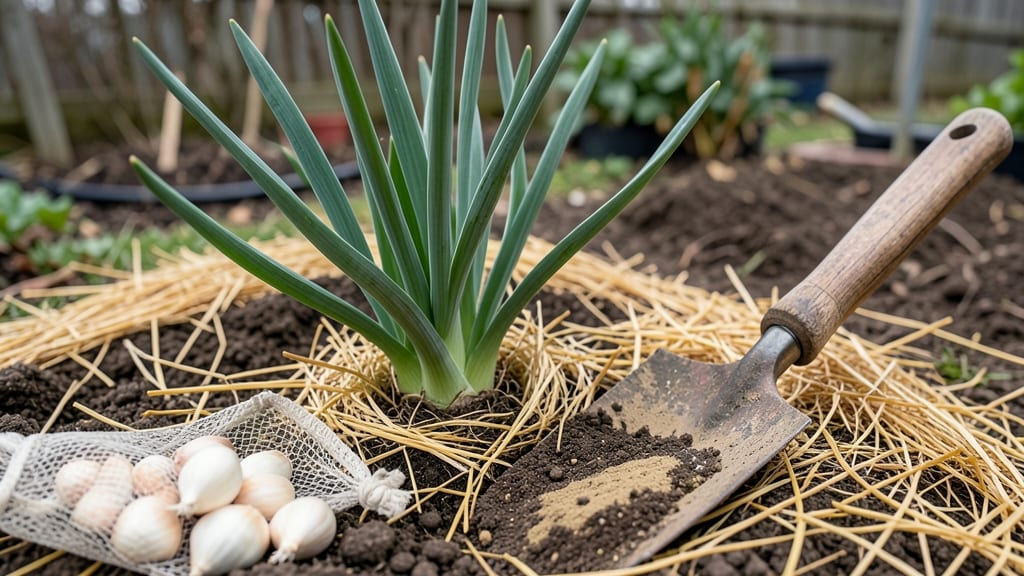
To plant garlic in your garden, choose a location with well-draining soil, full sunlight exposure, and proper spacing—typically 4-6 inches deep with cloves spaced 4-6 inches apart, in fall for best yield and flavor development.
Garlic thrives in loose, fertile soil that drains excess moisture quickly—heavy clay or waterlogged areas will stunt growth. 🌱 The best planting time is 4-6 weeks before your first hard frost, allowing roots to establish before winter dormancy.
I've found that breaking apart garlic bulbs into individual cloves (keeping the papery skin intact) gives each one the space it needs to develop into a full bulb. This method also prevents overcrowding, which can lead to smaller, weaker harvests.
For maximum flavor and size, aim for 6-8 hours of direct sunlight daily. While garlic can tolerate partial shade, the bulbs may split or develop weaker flavor profiles. If your garden gets less sun, consider using raised beds or containers with excellent drainage.
Another pro tip: add a handful of compost or well-rotted manure to the planting hole—this boosts nutrient availability without overwhelming the plant.
💡 In This Article
- Optimal Soil Conditions for Garlic Growth
- Step-by-Step Garlic Planting Guide by Season
Optimal soil conditions for garlic growth
Garlic roots thrive in loose, well-aerated soil with a texture similar to crumbly cake batter—not dense like clay or sandy like beach sand. The ideal soil composition includes 40-60% sand, 20-30% silt, and 10-20% clay, creating tiny air pockets that prevent root rot while allowing moisture retention.
This structure mimics the volcanic loam found in Gilroy, California—the garlic capital of the U.S. where soil tests show pH levels between 6.0-7.0 and organic matter content of 3-5%.
Why does this matter? Garlic bulbs form underground where roots absorb nutrients through a process called osmosis. In compacted soil, roots struggle to extend beyond 6 inches deep, limiting bulb development.
The mycorrhizal fungi naturally present in well-drained soil also form symbiotic relationships with garlic roots, boosting nutrient uptake by up to 30%. Without proper drainage, these beneficial fungi can't thrive, leaving plants vulnerable to white rot and basal rot diseases.
One of my favorite soil amendments is composted leaf mold, which improves structure while adding trace minerals like boron—critical for garlic's bulb formation. I've seen firsthand how adding 1-2 inches of compost before planting increases bulb weights by 25-30% compared to unamended soil.
The key is balance: too much organic matter can create nitrogen-rich conditions that promote leafy growth over bulb development.
For visual reference, imagine a well-prepared garlic bed: the soil should hold a dime-sized clod when squeezed but crumble easily between fingers. If it forms a hard ball, it's too compact; if it falls apart like dust, it lacks structure.
A simple jar test works well—fill a jar with soil and water, then shake. Well-draining soil will show distinct layers (sand at bottom, silt middle, clay top) with water clearing within 30 minutes.
Another critical factor is moisture consistency. Garlic roots need steady hydration but hate soggy conditions. In my Zone 5b garden, I use drip irrigation set to deliver 1/2 inch of water weekly during growing season, adjusting for rainfall.
The goal is to keep soil 60-70% moisture capacity—never waterlogged. This prevents neck rot, a fungal disease that turns bulbs mushy and inedible.
Here's what happens when conditions go wrong: in acidic soil (pH <5.5), garlic absorbs toxic aluminum, stunting growth. In alkaline soil (pH >7.5), calcium becomes less available, causing bulb splits. The sweet spot—pH 6.0-7.0—ensures optimal nutrient availability while preventing these issues.
Test your soil before planting using a $10 home kit or send a sample to your local extension office for professional analysis.