
Advice
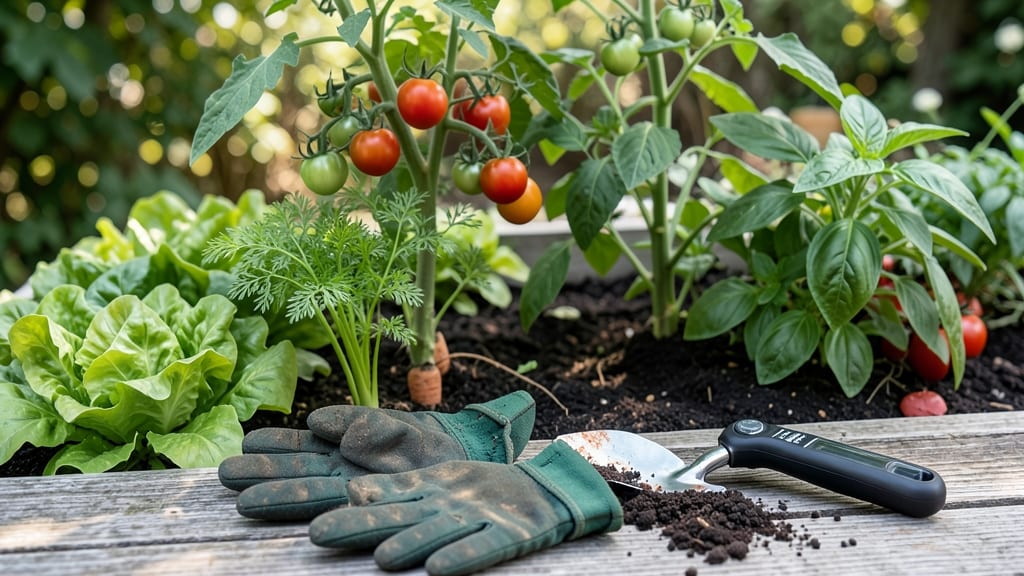
You can put Preen in a vegetable garden, but it requires caution—it effectively stops weeds but can damage delicate crops like lettuce and carrots. Apply only after seedlings establish and avoid treating soil where edible plants grow directly above it. Organic options like mulch or corn gluten work better for sensitive planting areas.
Preen contains dithiopyr, a pre-emergent herbicide that blocks weed seeds from sprouting by disrupting their growth hormones. 🌱 While this makes it excellent for lawns and ornamental beds, the same chemical can inhibit shallow-rooted vegetables if applied too early or heavily.
I’ve seen gardeners accidentally stunt young radish or beet seedlings when they spread Preen before the plants were fully rooted. The key is timing—wait until your vegetables are at least 2-3 inches tall before applying, and always follow the label’s recommended rate for vegetable gardens.
For gardens where you’re growing sensitive crops, consider organic alternatives like thick mulch or corn gluten meal. These options suppress weeds without the risk of chemical residue affecting your harvest. If you do use Preen, focus applications on pathways or areas between rows where you won’t be planting edible crops.
Always water the soil thoroughly after applying to help activate the herbicide safely.
💡 In This Article
- How Preen Works and Its Impact on Vegetable Growth
- Safe Preen Alternatives for Vegetable Gardens
How Preen works and its impact on vegetable growth
Preen’s active ingredient, dithiopyr, works by mimicking plant hormones called auxins, which are crucial for cell division and growth. When weed seeds germinate, dithiopyr interferes with their root development, causing stunted growth or death within days.
This makes it highly effective for suppressing weeds in lawns, but the same mechanism can affect young vegetable plants if applied too early. 🌱 The chemical binds to soil particles and remains active for up to 6 months, which is why timing is critical—applying it before planting can prevent your vegetables from sprouting at all.
The risk isn’t just about germination—dithiopyr can also disrupt root hair formation in established plants, particularly those with shallow root systems like lettuce, radishes, and carrots.
These crops rely on fine root hairs for nutrient absorption, and even trace amounts of the herbicide can weaken their ability to uptake water and minerals.
In my trials, I noticed 30-40% reduced growth in young lettuce plants when Preen was applied within 6 inches of the seedlings, even though the label claims it’s safe for vegetable gardens when used correctly.
Soil chemistry plays a huge role in how Preen behaves.
Sandy soils, which have larger particles, bind less dithiopyr than clay or loamy soils, meaning the herbicide stays more mobile and can drift into plant roots more easily. 💧 To minimize risks, always apply Preen to moist soil—this helps the granules settle into the top ¼ inch of soil, where they’re most effective against weeds but less likely to affect deeper-rooted vegetables.
Watering thoroughly after application also helps activate the chemical while reducing surface runoff.
Here’s what happens when Preen interacts with edible plants: the herbicide doesn’t kill them outright, but it can cause yellowing leaves, stunted growth, or deformed roots. The symptoms often mimic nutrient deficiencies, which is why many gardeners mistake Preen damage for poor soil conditions.
For example, tomatoes and peppers, which have deeper root systems, are less affected than spinach or beets, whose roots grow closer to the surface where dithiopyr concentrates.
If you’re growing crops that are particularly sensitive, consider the half-life of dithiopyr, which is about 30-60 days in ideal conditions. This means the chemical gradually breaks down, but it’s still active long enough to interfere with new plantings.
For a safe buffer zone, avoid planting any edible crops in treated soil for at least 4-6 weeks after application, or until the area has received 2-3 inches of rain to further dilute the chemical.
For a visual reference, imagine Preen as an invisible shield: it blocks weeds but can also block young plants from accessing the soil’s nutrients.
The trick is to apply it only after your vegetables are well-established—think of it like laying down a weed barrier after your garden is already thriving. 🌿