
Tools
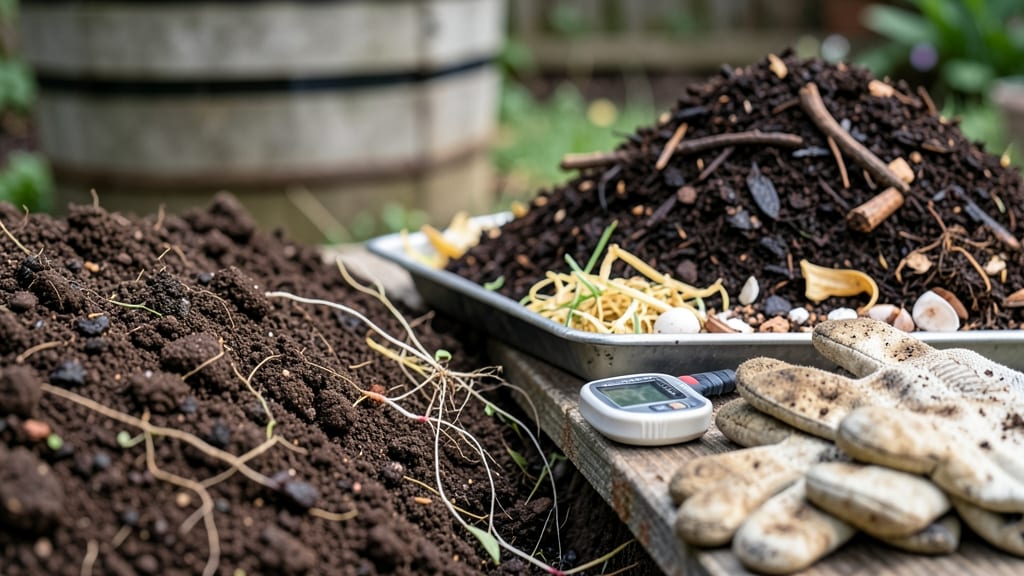
Balancing garden soil and compost means adjusting nitrogen, phosphorus, and potassium (NPK) ratios—like using 5-5-5 for general planting, 10-10-10 for flowering plants, or 3-1-2 for leafy greens—to fuel healthy growth without overloading or starving your plants.
Understanding NPK ratios in your garden soil and compost is like tuning a recipe—each nutrient plays a distinct role.
Nitrogen (the first number) fuels leafy growth, phosphorus (second) strengthens roots and blooms, while potassium (third) helps plants withstand stress. 🌱 For example, tomatoes thrive with higher nitrogen early on, but need balanced NPK as they fruit.
I always test my soil first—most garden centers offer cheap kits—and adjust by blending compost (which adds organic matter) with synthetic fertilizers for precision. The key is matching your mix to what your plants actually need, not just what’s convenient.
Compost itself is a powerhouse because it slowly releases nutrients, but it’s rarely perfectly balanced. That’s why I combine it with targeted fertilizers—like a 10-10-10 blend for roses or a 3-1-2 mix for lettuce.
Over time, you’ll learn to read your plants: yellow leaves often mean too much nitrogen, while weak stems signal phosphorus deficiency. The goal isn’t perfection but harmony—soil that’s alive with microbes and nutrients working together.
💡 In This Article
- How NPK Ratios Impact Soil and Plant Growth
- Creating Custom Soil Mixes with Compost and Fertilizers
How NPK ratios impact soil and plant growth
Nitrogen, phosphorus, and potassium (NPK) aren't just random numbers—they're the building blocks of plant life, each with a distinct role in the garden. Nitrogen (the first number) acts like a growth steroid for foliage, fueling rapid leaf and stem development.
Think of it as the energy drink for plants: too much, and you'll get lush leaves but few fruits or flowers. Phosphorus (second number) is the root and bloom specialist, helping plants establish strong foundations and produce flowers, fruits, or seeds.
Potassium (third number) acts as the plant's stress manager, improving drought tolerance and disease resistance—like a bodyguard for your garden.
Compost changes the game by adding organic matter that slowly releases nutrients, but its NPK ratios vary wildly depending on what you compost. Grass clippings create nitrogen-rich compost (high first number), while wood ash contributes phosphorus (boosting the second number). The magic happens when you blend compost with targeted fertilizers.
For example, a 10-10-10 fertilizer adds equal parts of all three nutrients, perfect for flowering plants like roses, while a 3-1-2 mix supports leafy greens by prioritizing potassium for resilience. The key is matching the ratio to your plant's life stage—young plants need more nitrogen, while fruiting plants crave phosphorus.
Here's where things get interesting: soil science reveals that plants actually absorb these nutrients in different ways. Nitrogen moves quickly through soil, so it needs frequent replenishment, while phosphorus binds to soil particles and becomes less available over time.
Potassium, being a cation, competes with other minerals like calcium and magnesium for absorption sites. This competition explains why some plants show deficiency symptoms even when soil tests show adequate levels—what's available isn't always what's accessible. 🌱 The solution?
Regular soil testing and layering amendments like compost to improve soil structure and microbial activity, which naturally enhances nutrient availability.
Let's break down what these ratios mean in real-world scenarios. Tomatoes start with high nitrogen needs (3-1-1 ratio) for vine growth but shift to 1-2-2 as they fruit to support heavy yields.
Flowers like petunias thrive with 5-10-10 ratios to encourage blooming, while lawns benefit from 24-0-4 mixes that prioritize nitrogen for that lush green carpet. The numbers aren't arbitrary—they reflect decades of agricultural research about what different plant families need at various growth stages.
What's fascinating is how compost acts as a natural buffer, preventing sudden spikes or drops in nutrient availability that can shock plant systems.
What most gardeners overlook is the microbial component. Healthy soil teems with bacteria and fungi that convert organic matter into plant-available nutrients. A 5-5-5 fertilizer provides immediate nutrition, but compost feeds these microbes, creating a self-sustaining cycle.
This is why I always blend 50% compost with 50% soil when planting—it's not just about the numbers, but about creating an ecosystem where roots can thrive. The texture matters too: compost adds porosity, preventing compaction that would otherwise strangle roots and reduce nutrient uptake.
Consider this example: My basil plants struggled with yellow leaves until I realized my compost-heavy mix was overloading them with nitrogen. Switching to a 2-3-2 ratio with added potassium-rich wood ash transformed their growth—stronger stems, better flavor, and no more leaf burn. The lesson?
NPK ratios are your garden's nutritional GPS, but the terrain (your soil type) and weather conditions (rainfall, temperature) affect the journey. Always start with a soil test to know your baseline, then adjust ratios like tuning a musical instrument until you find that sweet spot where your plants sing.