
Planting
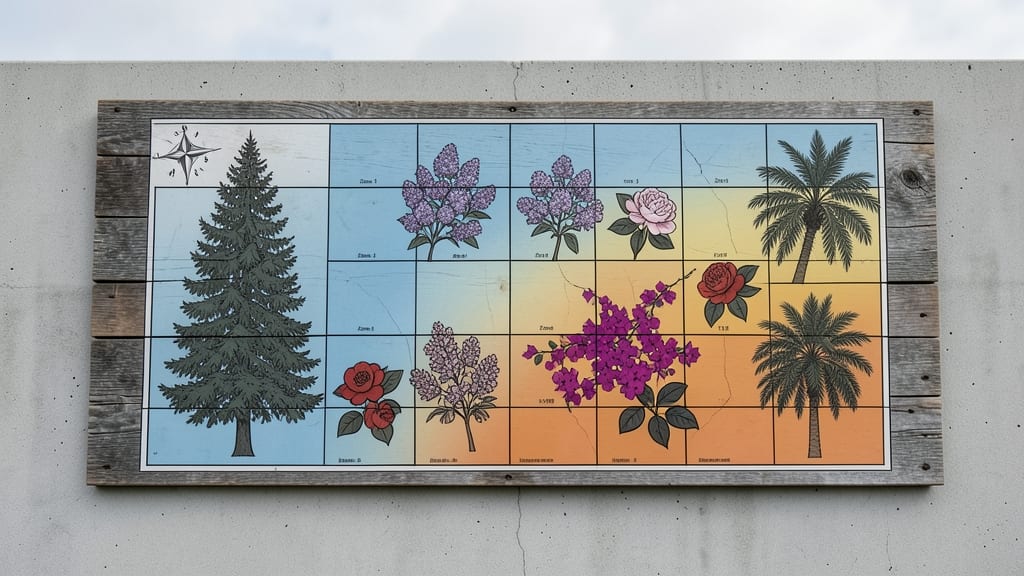
Understanding plant gardening zones helps you pinpoint your area's last frost dates, which is essential for choosing plants that thrive in your region's specific temperature patterns and seasonal transitions.
These zones, created by the USDA, group regions based on their average minimum winter temperatures, which directly impact when you can safely plant outdoors. 🌱 For example, Zone 5 areas typically experience their last frost around April 15, while Zone 9 regions often see their final freeze by February 15.
The key here is that these dates aren't set in stone—microclimates, elevation changes, and recent climate shifts can create variations even within the same zone.
To get the most accurate planting schedule, I recommend checking your exact USDA zone using the interactive map and then cross-referencing with local weather records.
Many gardening apps now include frost date calculators that factor in your specific location's historical data, giving you a more precise timeline than the general zone guidelines.
💡 In This Article
- How USDA Plant Hardiness Zones Define Frost Timing
- Finding Exact Last Frost Dates for Your Planting Schedule
How USDA plant hardiness zones define frost timing
The USDA Plant Hardiness Zone Map divides North America into 13 zones based on the average annual minimum winter temperatures, which directly influence when frost occurs in your region.
Each zone represents a 10°F range—Zone 3, for example, averages between -40°F and -30°F, while Zone 10 stays above 30°F.
These temperature thresholds determine which plants can survive winter, but they also correlate strongly with last frost dates because cold snaps and frost events typically occur when temperatures drop below 32°F.
Here’s the science: Frost forms when moisture in the air freezes onto surfaces, and this happens most reliably when nighttime temperatures fall below 32°F.
The USDA zones help predict these events because colder zones (like Zone 4) experience later last frosts—often as late as May 15—while warmer zones (like Zone 8) see their final freeze by March 15.
Elevation plays a critical role too: Areas just 1,000 feet higher can be 3-5°F colder, delaying frost timing by 1-2 weeks. For instance, Denver (Zone 5b) might have last frosts around April 20, but nearby mountains in Zone 4 could see frost until May 10. 🌡️
Microclimates further complicate these predictions. A south-facing slope warms faster in spring, potentially pushing last frosts 1-2 weeks earlier than the surrounding area. Urban heat islands—where pavement and buildings trap warmth—can also create localized shifts.
The USDA updates its zone map every 10 years to reflect climate change, which has already shifted many regions into warmer zones. For example, parts of Zone 6 now experience temperatures closer to Zone 7 due to rising average winter lows.
To apply this to your garden, start by identifying your zone using the interactive USDA map, then adjust for local variations.
If you’re in Zone 7a (0°F to 5°F), your last frost might align with the general April 15 guideline, but a nearby valley could see frost until May 1.
Planting heat-loving tomatoes too early in Zone 7 without checking local frost records could mean losing your crop to a late freeze. 🌱
For precise timing, combine the USDA zone with historical frost data from your local weather station. Many gardeners use the 32°F threshold as a rule of thumb, but some plants (like peppers) need 50°F soil temperatures to thrive, which may not align with the last air frost.
Tools like the National Oceanic and Atmospheric Administration (NOAA) frost calendar or apps like Old Farmer’s Almanac provide hyper-localized data to refine your schedule.
One common mistake is assuming the last frost is the same as the first frost in fall. While both are tied to 32°F, the timing varies widely—some Zone 5 areas might see their first frost in October, but last frosts linger until May.
Understanding this asymmetry helps you plan both spring plantings and fall harvests correctly.