
Light Requirements
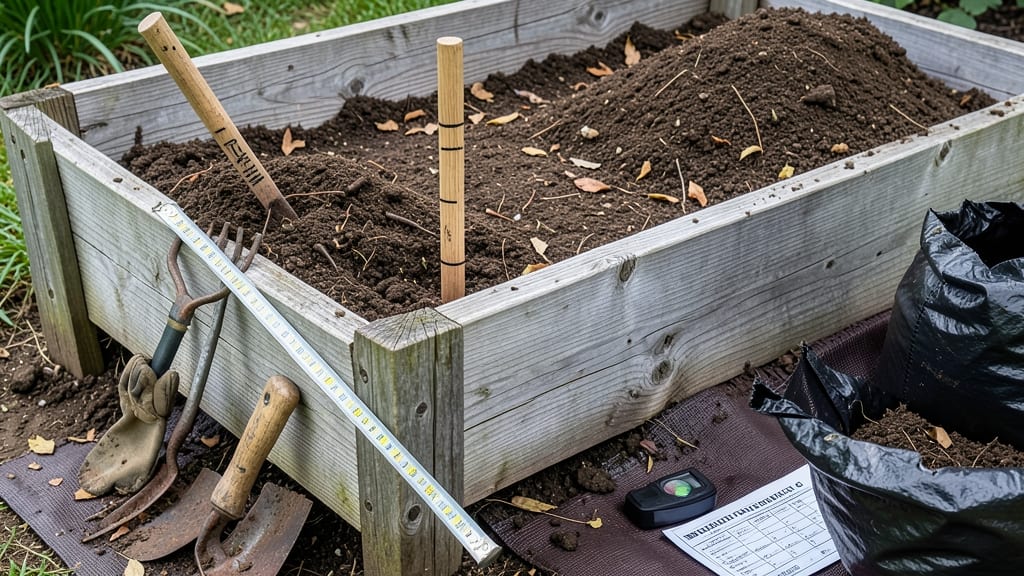
To determine how much soil for a raised garden bed, multiply the bed's length, width, and depth in feet (e.g., a 4’x8’ bed filled to 12” depth requires ~32.4 cubic feet of soil). Root vegetables demand deeper beds (12-18”), while shallow plants like herbs need only 6-12”.
Figuring out soil volume starts with simple math, but real-world factors complicate things. 🌱 A 4’x8’ bed filled to 12” depth needs about 32.4 cubic feet of soil, but remember that soil settles over time—buy 10-20% more to account for compaction.
For example, if you're mixing your own soil blend (60% topsoil, 30% compost, 10% perlite), each cubic foot of finished mix will weigh roughly 40-50 pounds, so plan for heavy lifting or delivery.
I always round up to the nearest whole bag when ordering pre-mixed soil to avoid running short mid-project.
Your plant choices directly impact how deep your bed should be. Root crops like carrots or potatoes need that full 12-18” depth to grow properly, while shallow plants such as lettuce or basil will thrive in just 6-12”.
The soil mix matters too—heavy feeders like tomatoes benefit from extra compost, while drought-prone areas need perlite or sand for better drainage. Pro tip: I test my soil's drainage by filling a jar with your mix, adding water, and timing how long it takes to drain—ideal is about 30 minutes.
💡 In This Article
- Soil Volume Math for Raised Garden Beds
- Best Soil Mixes for Different Raised Bed Plants
Soil volume math for raised garden beds
The formula for calculating soil volume is straightforward: multiply your bed's length, width, and depth in feet. For example, a 4’ x 8’ x 1’ bed (12” depth) requires 32 cubic feet of soil. However, this is just the starting point—soil settles over time, especially when watered and worked.
I’ve found that organic mixes (like 60% topsoil + 30% compost) can compact by 20-30% after a season, so always round up. A 4’x8’x12” bed might actually need 40 cubic feet of loose soil to end up with 32 cubic feet of settled mix.
Converting cubic feet to bags is where things get practical. Most pre-mixed garden soil bags contain 1-2 cubic feet, so a 32-cubic-foot bed would need 16-32 bags. Pro tip: Weigh your bags first—some brands underfill.
I once ordered 25 bags for a project and ended up short because each bag actually held only 1.2 cubic feet. For custom mixes, account for bulk density: 1 cubic foot of topsoil weighs ~40 lbs, while compost is lighter (~25 lbs).
This means your 4’x8’x12” bed could weigh 1,200-1,600 lbs before planting!
Depth matters more than you’d think. Root vegetables like potatoes or parsnips need 18”+ of soil to develop fully, while shallow herbs (basil, thyme) thrive in 6-12”.
The science here is simple: deeper soil holds more moisture and nutrients, but too much depth (over 24”) can lead to waterlogging. I’ve seen beds with 30”+ depth where the bottom layer stayed soggy for months, stunting root growth.
For most home gardens, 12-18” is the sweet spot—enough for most crops but manageable to fill.
Don’t forget about soil amendments! A typical 60/30/10 mix (topsoil/compost/perlite) changes the volume math. Perlite adds air pockets, making the mix lighter but less stable—it can settle unevenly. For heavy feeders like tomatoes, I add 10% worm castings to the mix, which reduces bulk density further.
Always test your soil’s moisture retention: Fill a jar with your mix, add water, and time drainage. Ideal is 30-60 minutes—faster means add compost; slower means add sand or perlite.
Here’s a quick reference for common bed sizes:
- 4’x4’x12”: ~16 cubic feet (8-16 bags)
- 4’x8’x12”: ~32 cubic feet (16-32 bags)
- 8’x8’x12”: ~64 cubic feet (32-64 bags)
For large beds, consider renting a wheelbarrow (2-3 cubic feet) or a dump cart (6 cubic feet) to move soil efficiently. And always lay down landscape fabric first—it prevents weeds from stealing nutrients and keeps your soil where it belongs. 🌱